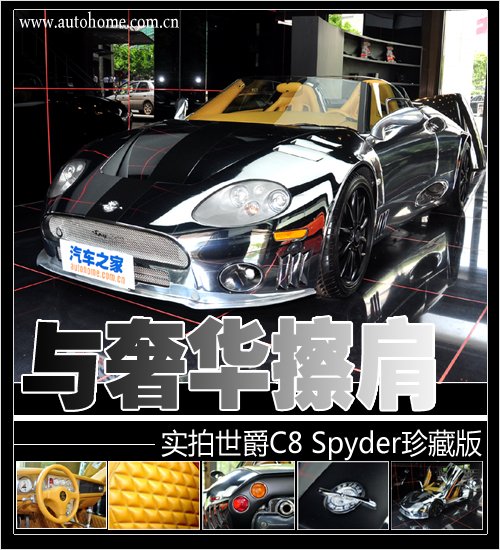
Rub shoulders with luxury, real shot of spyker C8 Spyder collector’s edition

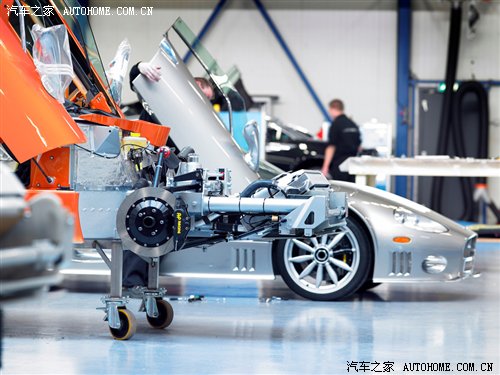
  [New Car Illustration] The name Spyker is extremely strange to most Chinese people, and it can’t be associated with anything. To tell the truth, before that, I only had a superficial understanding of Spyker. In my impression, Spyker brand has a long history but has disappeared for more than half a century. After the resurrection of the 21st century, it launched a classic legendary model, which was hand-built and designed uniquely, which seemed out of place among a group of super-runners who took pleasure in challenging the speed limit. Some time ago, Spyker exhibition hall of Spyker settled in Shanghai, and besides C8 Aileron, a new generation GT sports car of Spyker, there is also the spyker C8 Spyder collector’s edition that we actually shot today.


  According to Spyker China, the current starting price of this model is about 3.8 million yuan, but usually the final price of the car owner after adding some personalized options is far more than that. The most difference between this model and the ordinary version of spyker C8 Spyder is the bright silver body. Since there happens to be a car in the shop, let’s show it to you through simple real shots. Of course, let’s review Spyker’s long history before entering the real shot.


More related links-


SPYKER Shanghai Exhibition Center officially settled in Xintiandi.
//www.autohome.com.cn/news/201106/211022.html


■ Spyker History Review


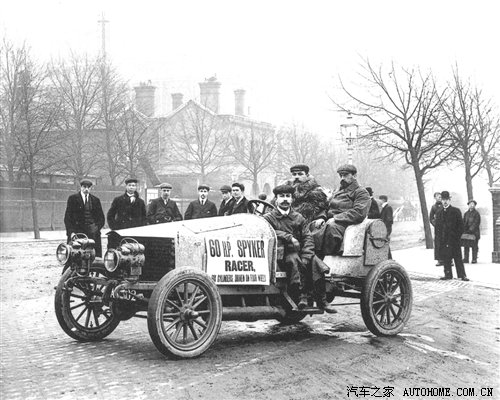
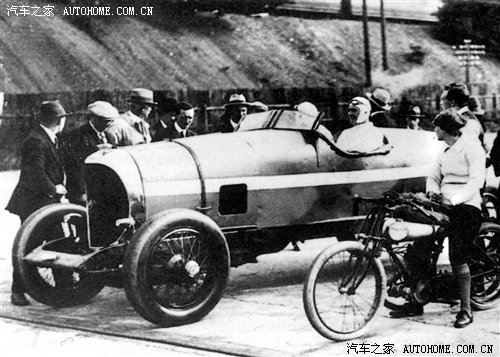
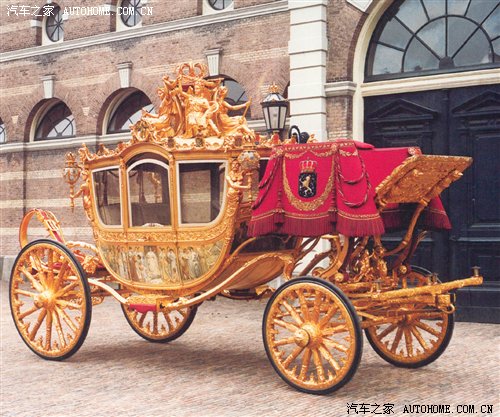
  In 1898, two Dutch carriage manufacturers, JACOBUS and HENDRIK-JAN)· SPIJKER, built their first car with an engine in Amsterdam. In the same year, in order to present the upcoming coronation ceremony of Wilhelmina, Beatrix Wilhelmina Armgard, Spijker made the famous golden ceremony carriage, which was also used in various celebrations in the Netherlands in the 21st century.


  In order to better adapt to foreign markets, they changed the "ij" in the middle of Spijker to "Y" and changed the company name to SPYKER. Spyker’s first car was officially launched in 1900, equipped with twin-cylinder 3hp and 5hp engines provided by Ben Ci. In 1903, Spyker 60 HP, which was extremely advanced at that time, was introduced. This is the world’s first car with six engines, constant four-wheel drive and four-wheel brake.


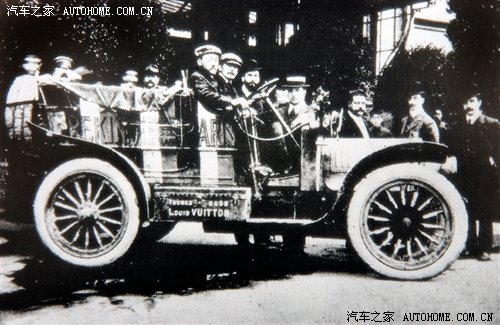
In 1907, the legendary SPYKER 14/18 HP passed through Moscow in the "Beijing-Paris Rally".


  Before the First World War, the demand for luxury cars in the world began to decline. Nevertheless, Spyker successfully participated in the Beijing-Paris Rally in 1907 with its 18hp model and won the second place.


SPYKER 60 HP in 1903, the world’s first six-cylinder four-wheel drive car.


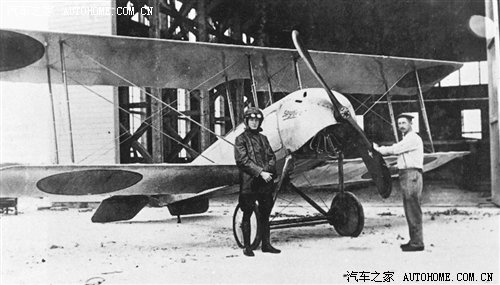
Spyker IV is the first plane designed entirely by Spyker, which uses a quick engine.


  In 1914, SPYKER merged with Dutch Aircraft Manufacturing Co., Ltd. and began to develop and produce aircraft. During the World War II, Spyker Company produced 100 fighter planes and 200 aero engines.


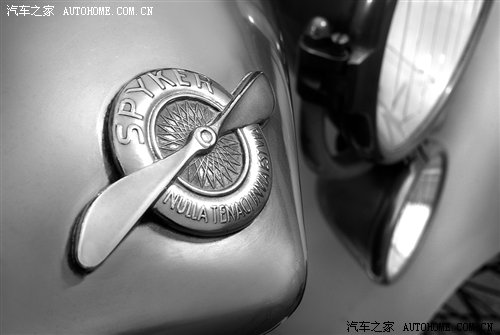
  In 1915, Spyker put forward the slogan of "persistent, strong and unimpeded", which has been used ever since. At the same time, a new company logo was introduced, which is the spoke wheel that we are familiar with later.


  In 1922, Spyker introduced the simplified model 13/30 C1, but the sales volume was disappointing and fell into the edge. Although it continued to produce and sell at a reduced price, its business still plummeted. Until all the funds were exhausted in 1926, its final products were C2 two-ton trucks and C4 cars. The early Spyker Company produced and manufactured more than 2,000 cars.


"Spyker factory after rebirth"


  In 2000, 75 years after the original company disappeared, Spyker regained its vitality. The new Spyker Automobile Company was founded in 1999 by Dutch businessmen Victor Muller and Maarten de Bruijn. Since 2000, we have been specialized in producing high-end sports cars, such as C8 and C8 Laviolette.


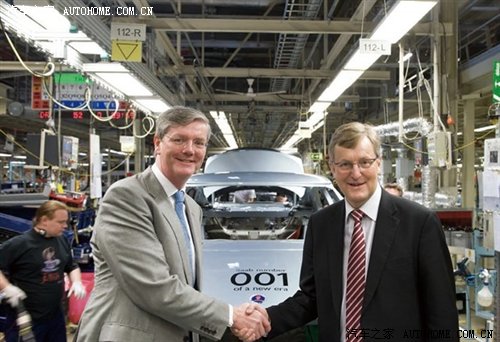
  In 2009, Spyker planned to buy cars from General Motors, and reached an acquisition agreement on January 26th, 2010. The combination of Spyker and Saab makes Spyker Automobile Co., Ltd. an automobile enterprise that participates in the global automobile industry competition, in addition to the brand essence of aviation technology inheritance and unique and bold design shared by the two brands.


■ Motor racing


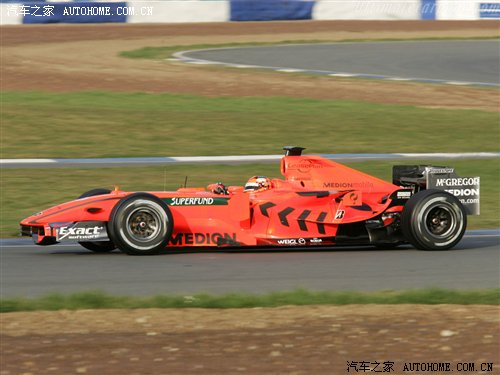
  On September 9th, 2006, Spyker bought the Midland F1 team from Russian businessman Alex Shnaider. Spyker paid $106 million to transform it into Spyker F1 team and participated in the last three races of the 2006 season. As part of the transaction, the original car changed its painting in the last three races to participate in the competition.


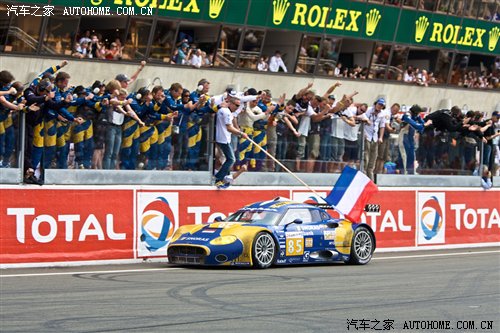
  Spyker Team Spyker Team is a competition team directly under the factory, participating in competitions such as Le Mans 24 Hours, Le Mans Series, FIA GT Championship and Cyberling 12 Hours. Spyker also provides racing cars for Spyker dealers in Switzerland and participates in various automobile competitions under the name of Spyker.


■ Spyker in the movie


Instinct 2


Ranger


  If you have seen the action movie "Ranger" starring Jet Li, you must remember the car of the killer with extraordinary skills-the convertible version of spyker C8 Spyder. There is also Instinct II, in which Sharon Si Tong’s sexy interpretation and the luxury and speed of super sports cars are unforgettable. Spyker adds a lot of color to the two films.

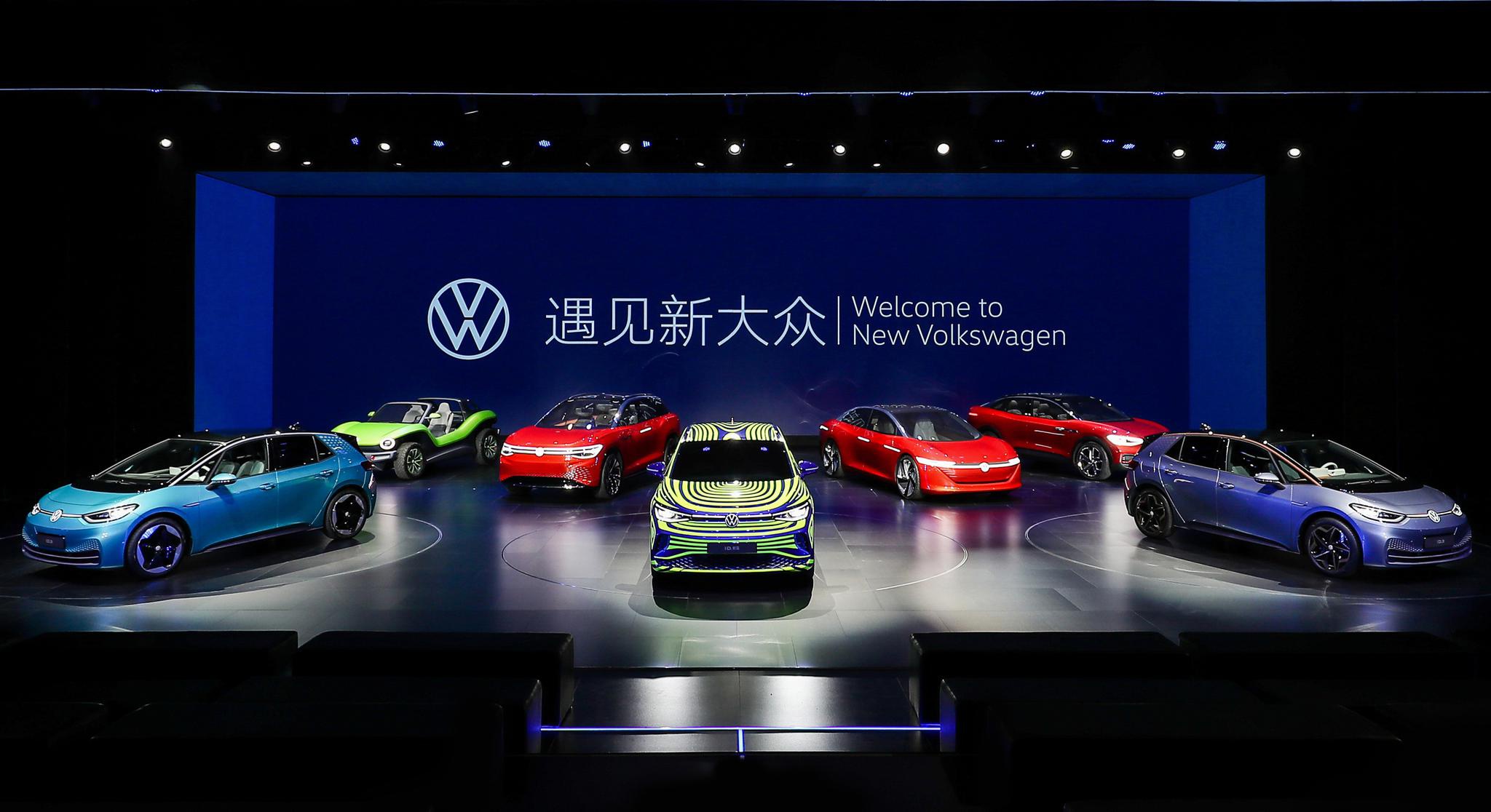
Re-create a popular MEB platform for the public to interpret the new energy trend.

  Faced with increasingly stringent fuel consumption and emission requirements, the production of new energy vehicles has become the most effective solution for major automobile manufacturers. Electrification will be the core strategy of Volkswagen in the next 10 years. To this end, from 2020, Volkswagen will produce pure electric vehicles on MEB platform, taking into account plug-in hybrid vehicles, and will become the main production platform for new energy vehicles. This article will show you in a simple way: what technical characteristics the Volkswagen MEB platform has, which models will be born here, and how to understand the MEB platform for consumers and even the automobile industry.

Re-create a popular MEB platform for the public to interpret the new energy trend.

  What you need to know about platform concept

  From the earliest PQ platform to the current MQB modular platform production mode, Volkswagen has become the first manufacturer in the automobile industry to put forward the concept of platform. In addition, its great success in the China market has not only made it the largest automobile company in the world, but also revolutionized the entire automobile industry with the concept of platform production. Modular platform production mode can keep the convenience of product technology upgrading, and can help the public shorten the development, production and listing cycle of automobiles and reduce manufacturing costs. The universality of MQB platform saves 20% of the manufacturing cost for Volkswagen Group.

  Under the general trend of new energy, MEB platform will be built for the production of pure electric vehicles and plug-in hybrid vehicles from 2020, and become the main production platform for Volkswagen new energy vehicles. Compared with other brands’ practice of launching a single model, it is obvious that Volkswagen intends to achieve comprehensive coverage of all levels of models. In the next five years, Volkswagen expects that the pure electric vehicles produced can account for 20%-25% of the total sales, and the return on capital of the automobile business department will be raised to over 15%. According to the official data of Volkswagen, the manufacturing cost of the first model ID.3 of MEB platform is reduced by 40% compared with the e-Golf pure electric golf of MQB platform.

  Technical characteristics of MEB platform

  MEB platform is called "Modular Platform for Electric Vehicles", which is short for "Modular Electrification Toolkit" in German. MEB has many similarities with the current MBQ, which is based on the concept of Volkswagen modularization, and has strong expansibility. It can build different body wheelbase and different adjustment and cruising range according to the demand and positioning, but it has its own characteristics in layout structure due to the removal of the traditional internal combustion engine and the increase of power batteries.

Re-create a popular MEB platform for the public to interpret the new energy trend.

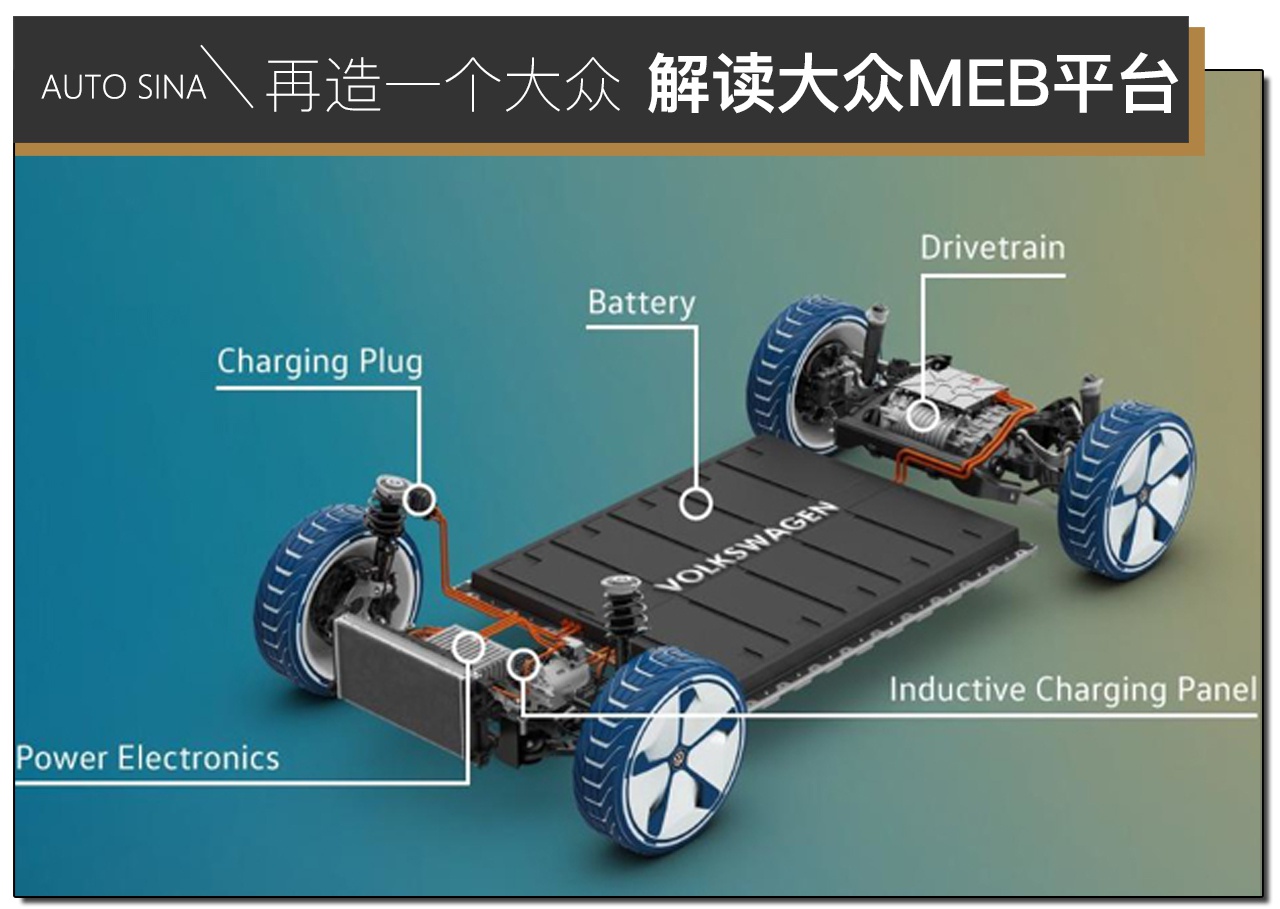
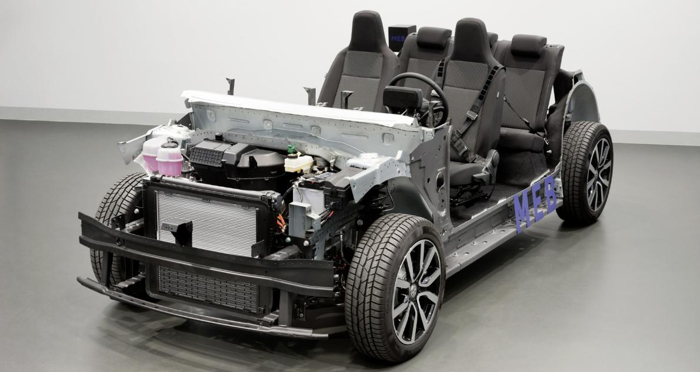
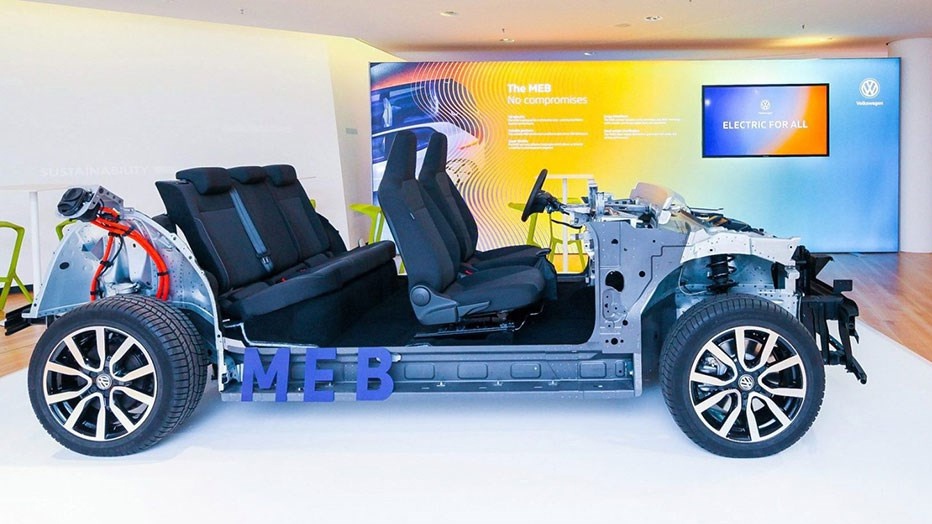
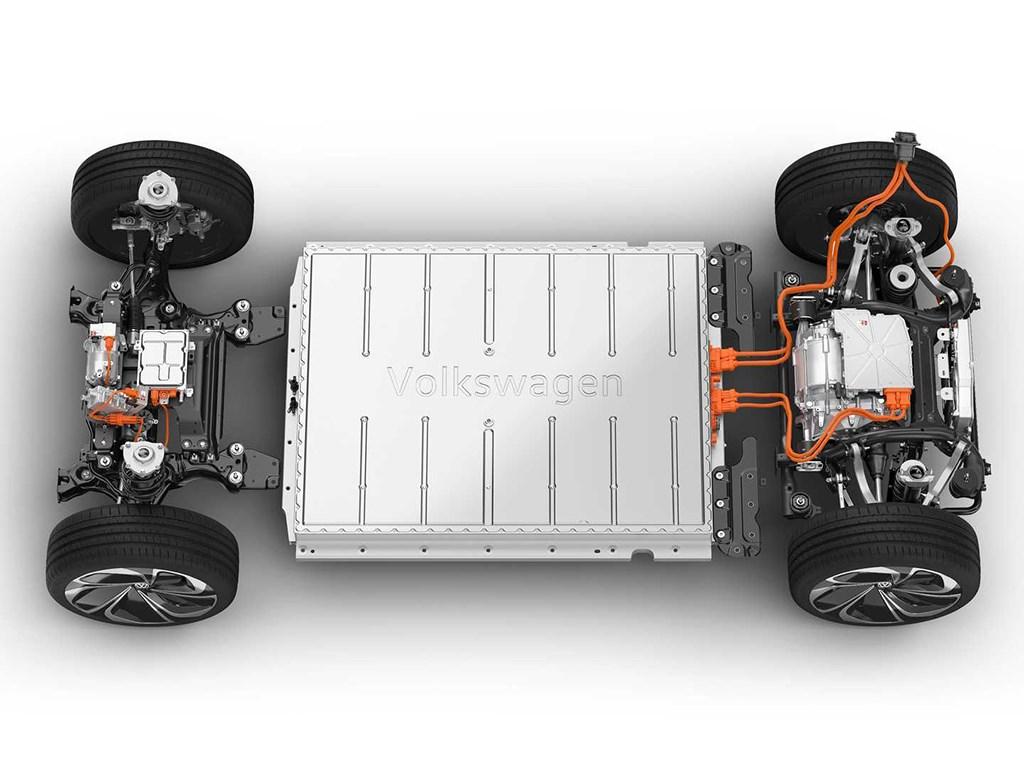
  The core components of MEB platform, such as battery pack and motor, are all set with fixed positions and modes. The battery is embedded in the bottom of the vehicle as a whole, and the axle module and the transmission system module are moved forward and backward as far as possible, so that the produced vehicle has a longer wheelbase and a shorter front and rear suspension, which maximizes the space and brings more cockpit space and a higher sitting posture.

Re-create a popular MEB platform for the public to interpret the new energy trend.

  The most important part of the power battery, Volkswagen independently developed the design of the battery Package. The basic structure of this battery Package can be used on all MEB platform models, and the number of battery modules can be freely allocated according to the size of the models. Each module is divided into 24 groups of batteries, and the modules, together with the cooling device and the junction box of the high and low voltage vehicle system, are wrapped in aluminum casings. The power battery voltage of the original MEB platform was fixed at 408 volts, which was much higher than the 230 volts of the existing new energy vehicles on the Volkswagen MQB platform.

Re-create a popular MEB platform for the public to interpret the new energy trend.

  The new platform takes into account the compatibility of the current mainstream flexible battery cells and prismatic batteries, so Volkswagen has maintained a very high degree of flexibility in cooperation with battery suppliers. Taking ID.3 as an example, the battery pack can accommodate up to 12 modules, and the usable capacity exceeds 77KWh;; The initial capacity of ID. which will be listed at the end of next year can reach 83KWh, and the future Volkswagen electric flagship ID.Vizzion can even reach 111KWh.

Re-create a popular MEB platform for the public to interpret the new energy trend.

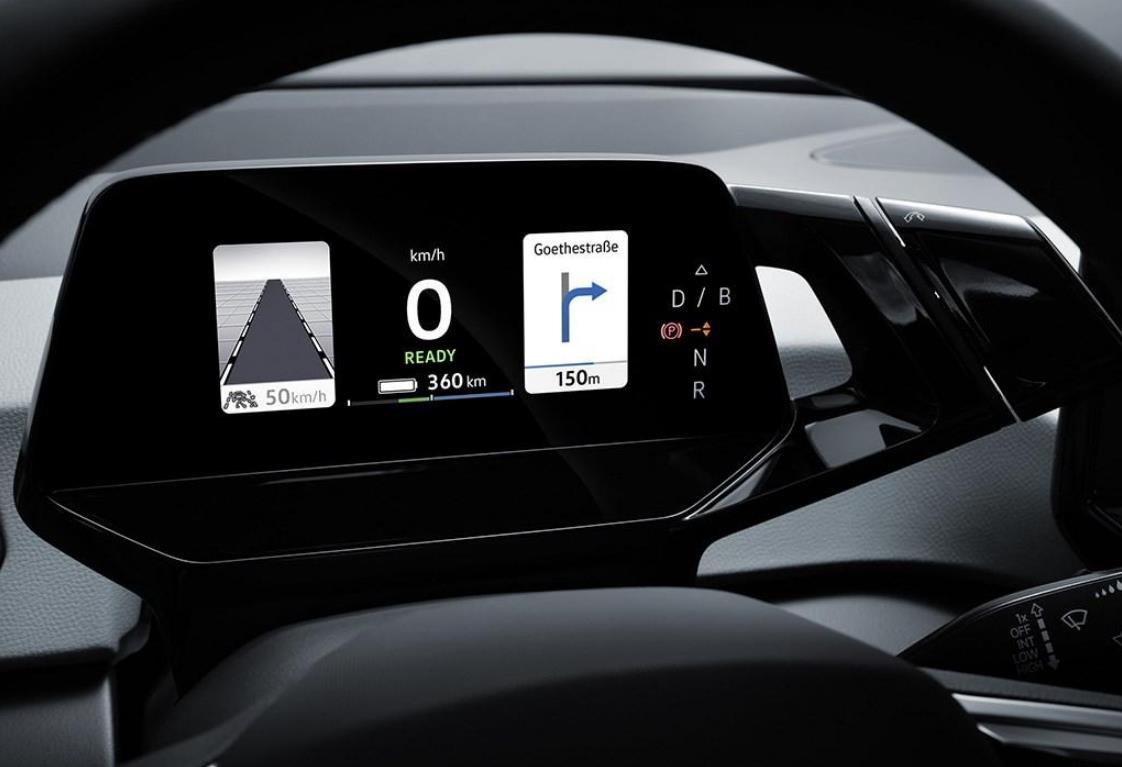
  MEB modular platform processing has brought about changes in production technology, and will also configure the required software systems for its models to realize digitalization, networking and fully automatic driving. At present, it can achieve high compatibility with MQB platform models, and the upcoming Golf 8 is the latest model with digital and networked equipment.

  What models will be available under MEB platform?

  Volkswagen Group plans to launch more than 80 new energy vehicles by 2025, including 50 pure electric vehicles and 30 plug-in hybrid vehicles. The annual sales will reach 3 million vehicles, accounting for 20%-25% of the company’s total sales. Volkswagen’s three joint ventures in China, FAW-Volkswagen, SAIC-Volkswagen and JAC-Volkswagen, will be important supports to boost sales in China market.According to the planning of Volkswagen Group, by 2022, Changchun, Qingdao, Anting, Foshan and Yizheng will each have a new energy factory.

ID.3

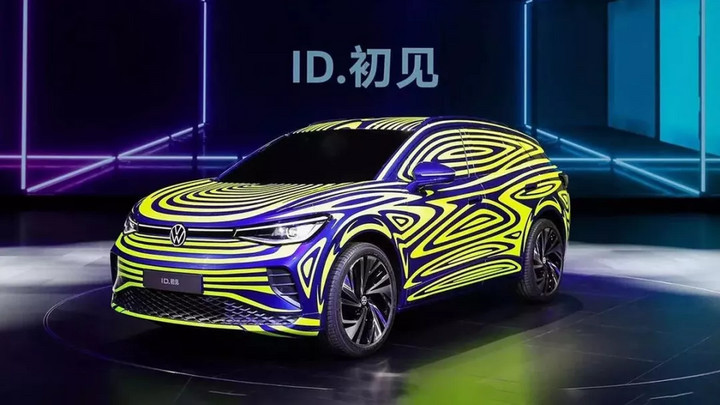
  In 2020, it will be the first to launch ID.3 and ID. At first sight in the domestic market, and then it will launch Audi Q4 e-tron and Skoda VISION IV production version. Among them, ID. At first sight, it will be manufactured in Shanghai Anting Factory together with brothers of Audi and Skoda. As the flagship of the family, the production version of I.D.VizzionID.5It will be the first to be listed in China in 2022. This car is positioned as a medium-sized car. Foreign media speculated that ID.5 is likely to be the successor of Volkswagen Passat.

First sight

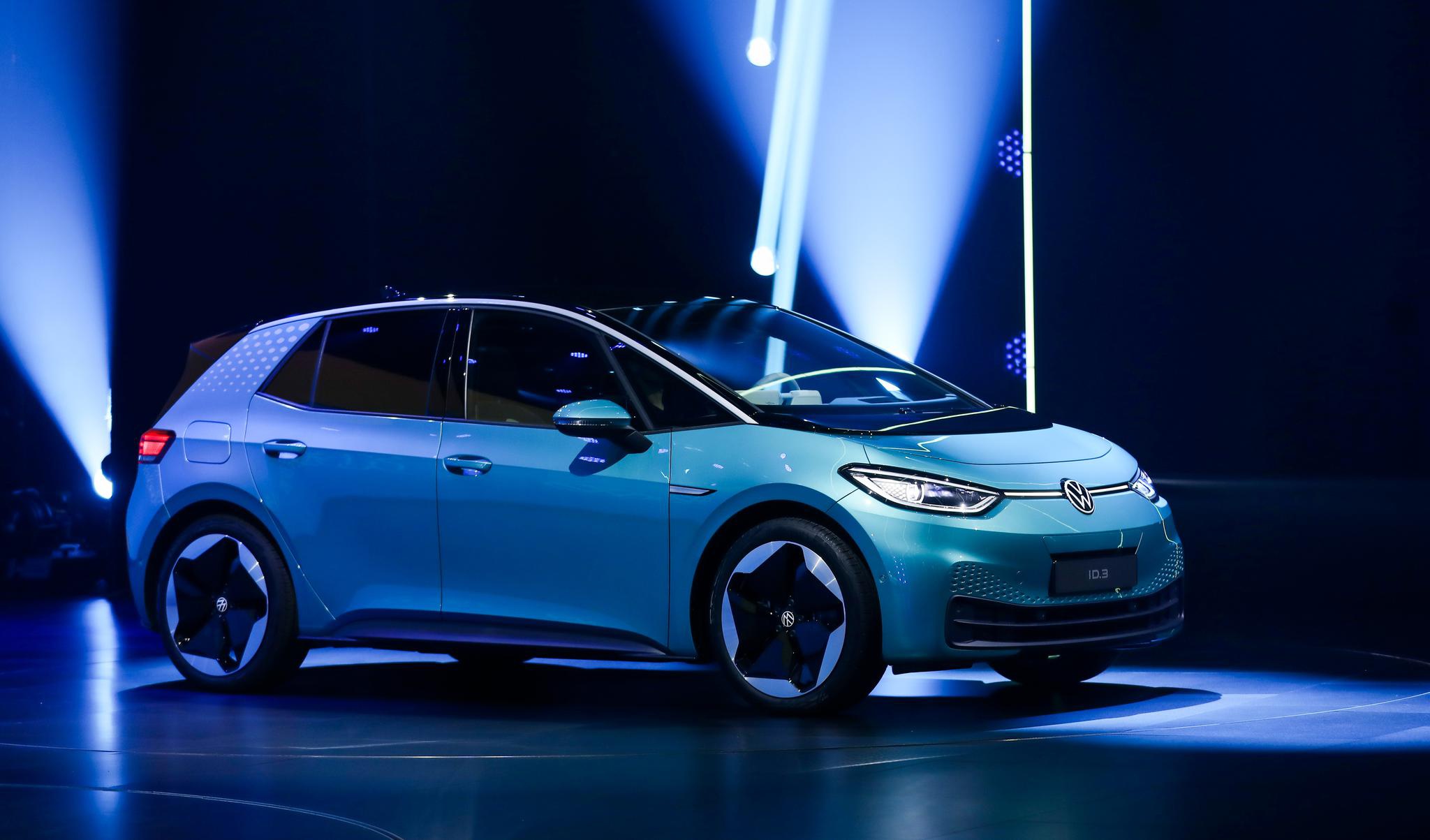
  Volkswagen regards ID.3 as the third groundbreaking product after Beetle and Golf. ID.3 is the first pure electric vehicle developed by Volkswagen based on MEB platform.It can be seen as a pure electric version of golf.In the future, smaller models than ID.3 will be named ID.1 and ID.2, and larger models will continue to use this naming method until ID.9. It is reported that Volkswagen has also applied for trademark protection of the letter "X", which will be used for SUV models.

Re-create a popular MEB platform for the public to interpret the new energy trend.

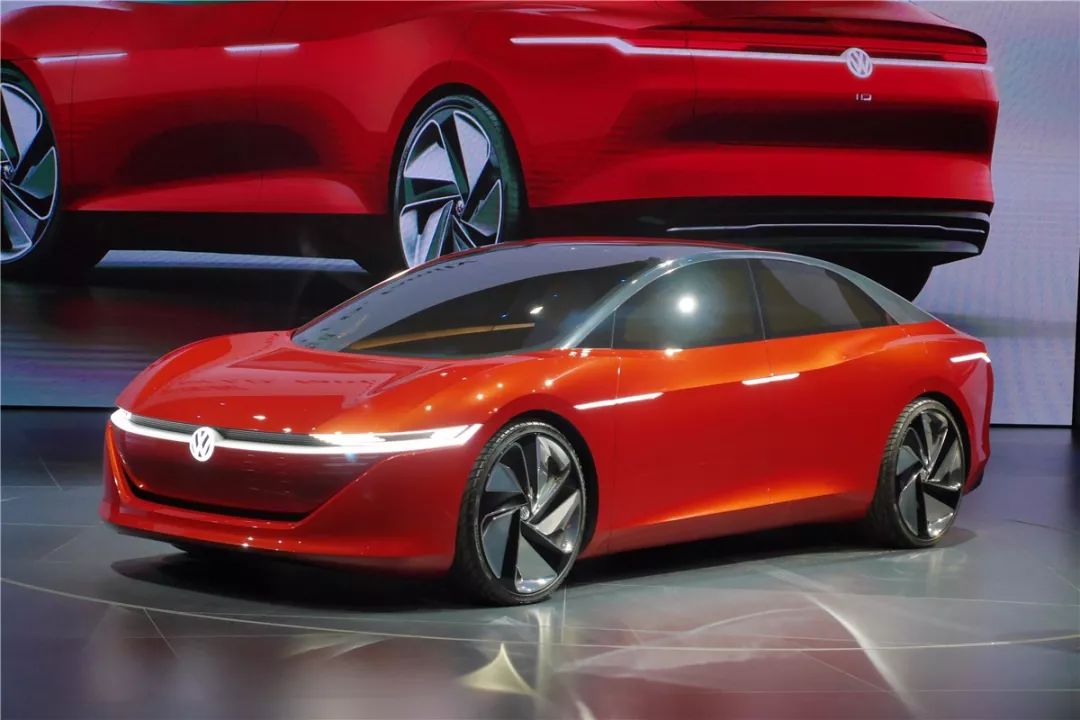
  The I.D. series has appeared in a number of concept cars, namely, ID CROZZ II, ID Vizzion and ID BUGGY concept cars, except for domestic ones.ID.3, ID. Beyond the first sight,There will be many models in the I.D. series, among which the ID CROZZ II corresponds to the ID.4GTX. It will be an SUV with a dual-motor layout and a standard Tesla Model X.

ID CROZZ II corresponds to ID.4GTX. It will be an SUV with a dual-motor layout and a benchmark Tesla Model X.
As the flagship of the family, the production version ID.5 of I.D.Vizzion will be the first to be listed in China in 2022.

  At the latest, by 2030, more than 300 models of the Group’s brands covering all levels of the global market will launch at least one electric version. The "Roadmap E" strategy is an extension and upgrade of the electric product planning in the "2025" strategy, which will not only promote the electric product planning of Volkswagen Group, but also greatly accelerate the electrification process of the group’s vehicle lineup.

  Not only MEB but also high-end PPE/JI.

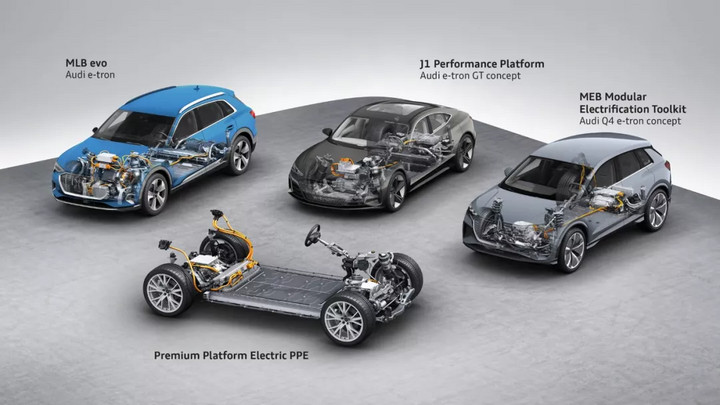
  Just as Volkswagen’s high-end luxury cars use MLB platform at present, in order to cope with future electrification, if MEB platform is the MQB platform for standard gasoline vehicles, then Volkswagen’s high-end gasoline vehicle platform MLB should also have a pure electric cousin-it is called PPE(Premium Platform Electric).

Re-create a popular MEB platform for the public to interpret the new energy trend.

  The PPE platform is jointly developed by Audi and Porsche. Its predecessor is Taycan, the first pure electric vehicle model of Porsche, and the Audi e-tron GT which will be mass-produced soon. In addition, there is a higher-end Bentley J1 pure electric platform. The PPE platform is expected to be launched in 2021, and its main technical highlights are also more advanced, including supporting air suspension, dynamic torque distribution, unsprung lightweight, 800-volt high-voltage power battery, and 350kW ultra-high power fast charging.

  MEB will promote the upgrading of China auto parts industry.

  China is undoubtedly Volkswagen’s largest market in the world, and Volkswagen also needs to accelerate the development of new energy vehicles on the basis of the existing product system. The brand-new platform can be completed not only by Volkswagen itself, but also by completely innovating the whole supplier system, which not only brings more new vehicle choices to domestic consumers, but also promotes the upgrading of China’s electric vehicle industry.

  Just like the reform and development in the past, the introduction of the concept of automobile joint production has promoted the development of automobile supporting industries in an all-round way and made China the largest automobile production and consumption market. By 2025, Volkswagen and joint ventures will invest a total of about 10 billion euros in electrification, including the research and development and production of electric vehicle products and the update and application of equipment, production lines and battery modules, but excluding the purchase of batteries. Volkswagen also plans to invest 75 million US dollars to start the motor production and transformation work in the Volkswagen gearbox Tianjin factory in December 2018.

  Summary: In the MQB era, Volkswagen has proved the advanced nature of modular production. Compared with Volkswagen, the brand-new MEB modular platform not only embraces the development trend of new energy, but also starts a new business for Volkswagen in the new period and continues to lead the development of Volkswagen. Every technological innovation will bring about the industrial upgrading of the whole industry. Compared with some brands that only introduce a few pure electric vehicles, Volkswagen’s approach is more systematic. The investment in research and development in the early stage and the turnaround of giants will bring greater domino effect, which will have a far-reaching impact on domestic auto parts industry and consumers, but also on future travel.

Press Conference on Pollution Prevention and Control in Henan Province in 2022

Press conference video

  At 10: 00 on April 12, 2022, the Information Office of the Provincial Government held a press conference on tackling the key problems of pollution prevention and control in Henan Province in 2022.

  Release content:This paper mainly introduces and interprets the implementation plan of the tough battle of air, water and soil pollution prevention and control in our province in 2022 and the tough battle of agricultural and rural pollution prevention and control, and answers questions from journalists and friends.

  Published by:

  Member of the Party Group and Deputy Director of the Department of Ecology and Environment of Wang Chaojun Province

  Director, Water Ecological Environment Division, Department of Ecological Environment, Lili Province

  Director, Atmospheric Ecological Environment Division, Zhoufeng Provincial Department of Ecological Environment

  Director, Soil Ecological Environment Division, Department of Ecological Environment, Liu Shuqiang Province

  Moderator:

  Chang Yiyuan, Director of Press Release Office of Propaganda Department of Provincial Party Committee
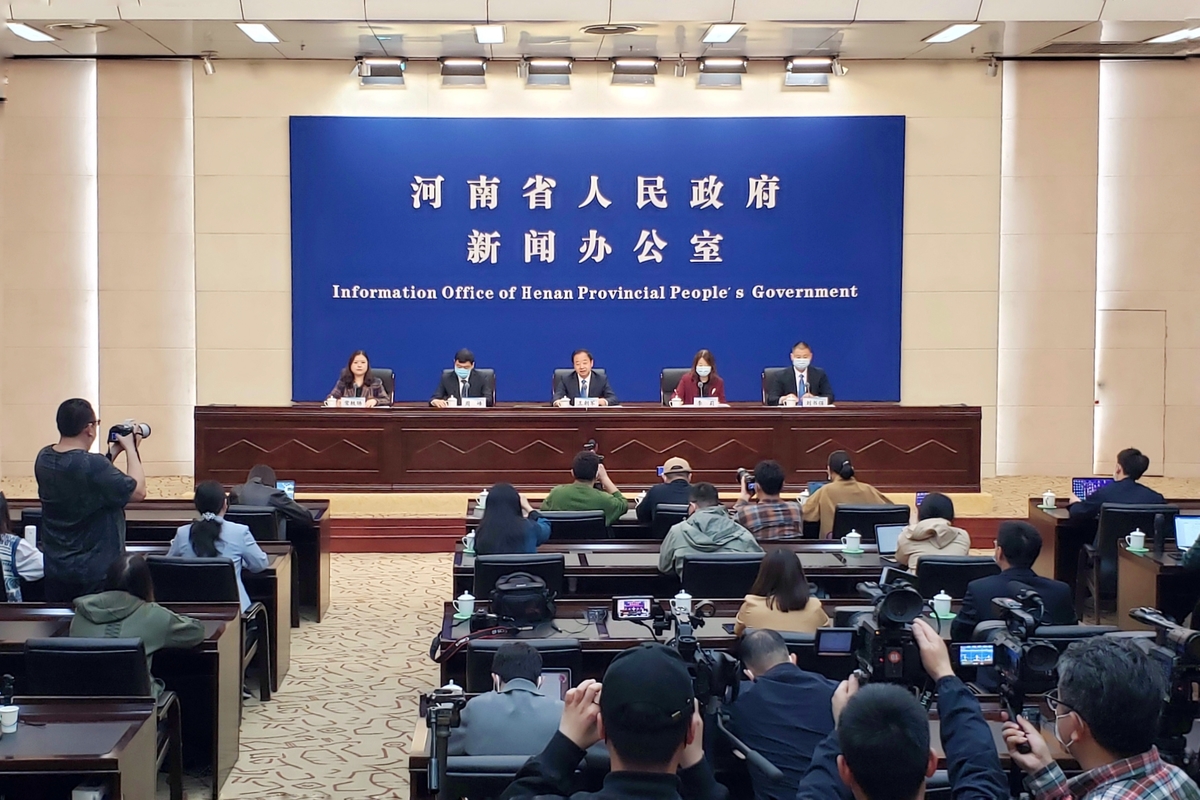
Press Conference on Pollution Prevention and Control in Henan Province in 2022

  Chang Yiyuan, Director of Press Release Office of Propaganda Department of Provincial Party Committee

  Ladies and gentlemen, friends from the press,

  Hello everyone! Welcome to the press conference held by the Information Office of Henan Provincial People’s Government.

  In order to further promote the construction of ecological civilization, resolutely fight the tough battle of pollution prevention and control, and constantly meet the people’s needs for a beautiful ecological environment, recently, with the consent of the provincial government, the Office of the Ecological Environment Protection Committee of Henan Province issued the "Implementation Plan for the Battle of Air, Water and Soil Pollution Prevention and Control in Henan Province in 2022 and the Battle of Agricultural and Rural Pollution Prevention and Control", which made a comprehensive arrangement for our province to further strengthen the ecological environment protection and fight the tough battle of pollution prevention and control. Today’s press conference will focus on introducing and interpreting the relevant situation of the "Program" and answering questions that the media are concerned about.

  First of all, let me introduce the publisher who attended today’s press conference:

  Mr. Wang Chaojun, member of the Party Group and Deputy Director of the Provincial Department of Ecology and Environment;

  Ms. Li Li, Director of Water Eco-environment Division of Provincial Eco-environment Department;

  Mr. Zhou Feng, Director of Atmospheric Ecological Environment Division, Provincial Department of Ecological Environment;

  Mr. Liu Shuqiang, Director of Soil Eco-environment Department of Provincial Eco-environment Department.

  Next, please let Mr. Wang Chaojun introduce the relevant information of the Plan.
king

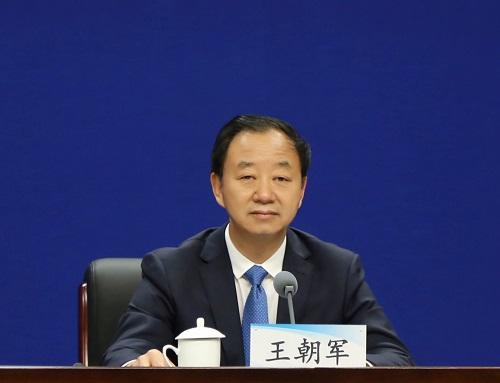
  Wang Chaojun, member of the Party Group and Deputy Director of the Provincial Department of Ecology and Environment.

  Media friends:

  Good morning everyone!

  First of all, on behalf of the Provincial Department of Ecology and Environment, I would like to express my heartfelt thanks to all journalists and friends for their long-term concern, support and reports on ecological civilization construction and pollution prevention and control. Below, I will briefly introduce the relevant situation of the "Program".

  First, the background of the "Program"

  A good ecological environment is the proper meaning of high-quality development, the green background of building a beautiful China, and the inherent requirement of realizing the Chinese dream of great rejuvenation. The Central Committee of the Communist Party of China and the State Council attached great importance to tackling the problem of pollution prevention and control. The Fifth Plenary Session of the 19th CPC Central Committee clearly put forward the idea of fighting the battle of pollution prevention and control in depth. Last year, the Opinions of the Central Committee of the Communist Party of China and the State Council on Fighting the Battle of Pollution Prevention and Control in depth was issued (Zhongfa [2021] No.40). From the "resolutely fight" in the 13th Five-Year Plan to the "in-depth fight" in the 14th Five-Year Plan, the Party Central Committee with the Supreme Leader as the core has consistently attached great importance to the tackling of pollution prevention and control. It is of great significance for the provincial party committee and government to fully implement the decision-making arrangements of the CPC Central Committee, anchor the "two guarantees", implement the "ten strategies", coordinate the ecological environment protection and economic and social development, and promote the green and low-carbon transformation, so as to ensure the high-quality construction and high-level realization of modern Henan. 2022 is a crucial year to promote the implementation of the "14th Five-Year Plan" and fight the tough battle of pollution prevention in depth. Therefore, the Office of the Provincial Eco-environmental Protection Committee made overall planning, systematic planning and hierarchical promotion, and issued the "Implementation Plan for Fighting the Air, Water and Soil Pollution in Henan Province in 2022 and Fighting the Agricultural and Rural Pollution", which formed the top-level design framework and comprehensive and systematic "construction drawing" and "road map" for this year’s pollution prevention and control work.

  Second, the overall thinking and main objectives of the "Program"

  On the whole, the four plans adhere to the guidance of Socialism with Chinese characteristics Thought of the Supreme Leader in the New Era, thoroughly implement the spirit of the 19th National Congress of the Communist Party of China and the previous plenary sessions of the 19th National Congress, fully implement the ecological civilization thought of the Supreme Leader and the important guiding spirit of the important speech of the General Secretary of the Supreme Leader’s inspection of Henan, fully and accurately implement the new development concept based on the new development stage, integrate and serve the new development pattern, and adhere to the general tone of striving for progress while maintaining stability. Focusing on the implementation of the strategic deployment of "a strong ecological province" and the objectives and tasks of the Tenth Five-Year Plan, focusing on improving the quality of the ecological environment, taking the synergy of pollution reduction and carbon reduction as the starting point, insisting on precise pollution control, scientific pollution control and pollution control according to law, realizing the two-way promotion and mutual promotion of high-standard protection of the ecological environment and high-quality economic development, laying a solid foundation for deepening the tough battle of pollution prevention and building a beautiful Henan where man and nature coexist harmoniously. It mainly highlights three characteristics.

  First, adhere to the people-centered development thinking. The "Proposal" takes improving the quality of the ecological environment and constantly meeting the people’s growing needs for a beautiful ecological environment as the starting point and the end result. Focusing on the outstanding ecological environment problems that the masses are concerned about, it plans governance measures in depth and strives to enhance people’s sense of happiness, acquisition and security in improving the ecological environment.

  Second, adhere to the realization of pollution reduction and carbon reduction synergy as the overall starting point. The "Plan" takes pollution reduction and carbon reduction as the starting point, adheres to the system concept and synergy, focuses on key regions, important fields and key indicators, and promotes a comprehensive green transformation of economic and social development.

  The third is to improve the quality of the ecological environment. The "Plan" clarifies the main objectives and key tasks of improving the quality of the ecological environment in 2022, and promotes the continuous improvement of the quality of the ecological environment by continuously increasing the intensity of tackling key problems and refining work measures.

  The "Proposal" targets the central government, combines the actual situation of our province, and focuses on three pioneering and innovative battles, namely, the battle to eliminate heavy polluted weather, the battle to prevent ozone pollution, and the battle to protect the Yellow River, as well as three consolidation and upgrading battles, namely, the battle to prevent and control diesel truck pollution, the battle to control urban black and odorous water bodies, and the battle to prevent and control agricultural and rural pollution, so as to further quantify our province’s key objectives and tasks this year. In terms of atmosphere, the annual average concentration of fine particulate matter (PM2.5) in ambient air in the province is controlled below 51 μ g/m3, the annual average concentration of inhalable particulate matter (PM10) is controlled below 85 μ g/m3, the proportion of days with excellent ambient air quality is not less than 64.2%, and the proportion of days with heavy pollution is controlled below 3.0%. In terms of water, the annual target of surface water environmental quality issued by the state and determined by our province has been completed. The water quality compliance rate of centralized drinking water sources in cities above the county level has reached 100% (except for high natural background value), and the water quality of Taocha water intake of Danjiangkou Reservoir in the Middle Route of South-to-North Water Transfer Project has reached Class II. In terms of soil, the safe utilization rate of polluted cultivated land is over 95%, and the safe utilization of key construction land is effectively guaranteed. The proportion of V-type water in the national examination area of groundwater is controlled within 25%. In agriculture and rural areas, 1,200 new administrative villages have completed rural environmental improvement, and the rural domestic sewage treatment rate has reached 36%. The rural domestic garbage collection, transportation and disposal system covers all villages and operates stably; The utilization rate of chemical fertilizer and pesticide for main crops reached 41% and 40.8%, respectively.The recovery rate of agricultural film is stable above 90%, and the comprehensive utilization rate of livestock manure is maintained above 82%.

  III. Key tasks of the Program

  The "Program" defined 101 key tasks in 27 aspects of the four major pollution prevention and control battles, including air, water, soil and agriculture and rural areas.

  In-depth fight against air pollution mainly includes: adjusting and optimizing industrial structure, promoting green and low-carbon transformation and development, and resolutely curbing projects with high energy consumption and high emissions; Deeply adjust the energy structure, promote clean production and low-carbon and efficient use of energy, and accelerate the formation of a green and low-carbon lifestyle; Continuously adjust the transportation institutions and fight the tough battle of diesel truck management; Optimize and adjust the land use structure, strengthen the control of non-point source pollution, and improve the control level of dust, open-pit mines, fireworks and firecrackers, agriculture, etc. Strengthen the control of volatile organic compounds, fight the tough battle of ozone pollution prevention and control, and speed up the short board of ozone pollution control; Strengthen regional joint prevention and control, and fight hard to eliminate heavy pollution weather; Strengthen basic capacity building and continuously promote the modernization of atmospheric environmental governance system and governance capacity.

  In-depth fight against water pollution, it mainly includes: continuing to fight the battle against urban black and odorous water bodies, consolidating and improving the effectiveness of black and odorous water bodies in the built-up areas of provincial cities, and preventing black and odorous; Continue to promote the investigation and treatment of black and odorous water bodies in the built-up area of the county. Efforts will be made to fight the tough battle of ecological protection and management of the Yellow River, carry out investigation and rectification of sewage outlets and comprehensive management of water environment, and eliminate the inferior category V in the national examination section. Strengthen the prevention and control of water environmental risks, and prepare the emergency disposal plan of "one river, one policy and one map" to consolidate and improve the level of drinking water safety. Promote the management and restoration of the ecological environment of rivers and lakes, create "beautiful rivers and lakes", and improve the quality of water ecological environment.

  In-depth fight against soil pollution mainly includes: deepening the detailed investigation of soil pollution, strengthening the prevention and control of soil pollution sources, and comprehensively improving the supervision ability of solid waste; Prevent new soil pollution in industrial and mining enterprises and promote green upgrading of industrial enterprises; Implement classified management of agricultural land according to law and strictly implement the early warning system of cultivated land soil; Effectively control the soil pollution risk of construction land, and promote the control and restoration of soil pollution risk; Strengthen the coordinated prevention and control of soil and groundwater pollution, and implement measures to meet or maintain water quality standards; Improve the ability of soil environmental supervision, strengthen the construction of institutional mechanisms and scientific and technological support.

  In-depth fight against pollution in agriculture and rural areas mainly includes: strengthening overall planning, zoning and classifying policies, and scientifically promoting agricultural domestic sewage treatment; Highlight both the symptoms and the root causes, systematically manage the source, and promote the long-term clean-up of black and odorous water bodies in rural areas; Further promote rural environmental improvement and consolidate the effectiveness of rural environmental improvement; Implement the actions of reducing and increasing the efficiency of chemical fertilizers and pesticides and recycling agricultural films; Strengthen the prevention and control of aquaculture pollution, strengthen the supervision and guidance of agricultural non-point source pollution control, and promote the green and low-carbon development of agriculture.

  Focusing on the realization of the goal of tackling key problems in pollution prevention and control in 2022, the Provincial Department of Ecology and Environment will intensify innovation in technology, policy and management to improve the modernization level of ecological environment management. Comprehensive use of legal, economic, administrative and other policy tools, increase the basic capacity building of ecological environmental protection, promote the completion of shortcomings in environmental infrastructure, and improve the effectiveness of ecological environmental supervision and law enforcement. Deepen the effectiveness assessment of the tough battle against pollution, and comprehensively use various means to urge the municipal and county governments to implement territorial responsibilities. Intensify publicity, strengthen contact and communication with the central and provincial major media and new media, vigorously promote public participation in atmospheric environmental protection, and unite the joint efforts to fight the battle against pollution. thank you

  Chang Yiyuan, Director of Press Release Office of Propaganda Department of Provincial Party Committee

  thank you Now welcome all journalists and friends to ask questions on issues of concern. Please also inform your news organization before asking questions.

  Henan Daily reporter

  As mentioned in the release just now, the "Proposal" will focus on three landmark battles: eliminating heavy polluted weather, preventing ozone pollution and controlling diesel truck pollution, so as to promote the continuous improvement of ambient air quality. Excuse me, what are the specific promotion measures? Thank you.
week

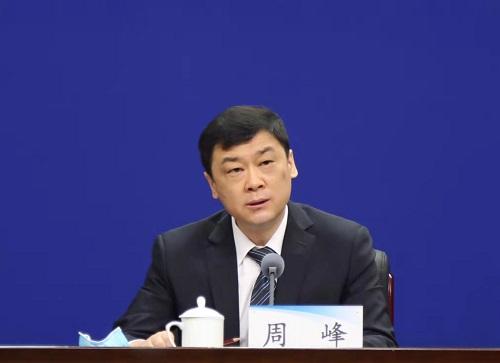
  Zhou Feng, Director of Atmospheric Ecological Environment Division of Provincial Ecological Environment Department.

  Thank you for your question. It is a major decision made by the CPC Central Committee and the State Council to fight the blue sky defense war. In recent years, through the unremitting efforts of the whole province, the ambient air quality in our province has been significantly improved, and the people’s sense of happiness and gain in the blue sky has been significantly enhanced. However, compared with the national standards and people’s expectations, the air pollution problems in key areas and areas in our province are still outstanding, the air quality indicators of PM10, PM2.5 and excellent days are still at a high level, and the heavily polluted weather in autumn and winter is still high and frequent; Ozone pollution has become increasingly prominent, which has become the primary factor leading to excessive air quality in some cities in summer; The pollution of diesel trucks has not been effectively solved, and mobile sources have become one of the main sources of nitrogen oxide emissions, contributing greatly to PM2.5 pollution in autumn and winter and ozone pollution in summer. In order to implement the relevant requirements of "Opinions of the State Council City, the Central Committee of the Communist Party of China Province on Deepening the Fight against Pollution", in accordance with the unified arrangements of the provincial party committee and the provincial government, the Provincial Department of Ecology and Environment adheres to the problem orientation, deeply analyzes the situation of air pollution prevention and control in the province, and focuses on three landmark battles of eliminating heavy pollution weather, ozone pollution prevention and control, and diesel truck pollution control, which are based on the present and long-term. In conjunction with relevant departments, the Implementation Plan for Fighting against Air Pollution in Henan Province in 2022 was formulated and issued, which clarified 37 key measures in eight aspects, focused on solving outstanding environmental problems that people care about, and strived to achieve new breakthroughs in key areas, important fields and key indicators. Focus on the following measures:

  The first is to promote the green transformation and upgrading of the industry. Actively support the development of strategic emerging industries such as energy conservation, environmental protection and new energy, and resolutely curb the blind construction of projects with high energy consumption and high emissions; Continue to promote the relocation of heavily polluting enterprises, implement the dynamic "zero clearing" of backward production capacity and "scattered pollution" enterprises, and actively promote the closure and integration of backward coal-fired small thermal power units (including self-provided power plants) within a reasonable radius of heating for cogeneration units above 300,000 kilowatts; Implement the comprehensive improvement project of traditional industrial clusters, and guide the transformation, upgrading and integration of industrial furnaces such as gas producer, cupola and brick kiln.

  The second is to promote clean and low-carbon energy transformation. Optimize the energy supply structure, vigorously develop new and renewable energy sources, and implement energy-saving and carbon-reducing transformation projects for key energy-using units; Carry out comprehensive management of scattered and inefficient coal, increase the substitution of loose coal in civil and agricultural fields, solidly promote the clearing of loose coal in plain areas, accelerate the "double reform" of replacing coal with electricity in tobacco curing barn and edible fungi enterprises in the province, and strictly prevent the re-burning of loose coal; Vigorously promote energy-saving transformation and cleaner production, completely eliminate coal-fired boilers with a capacity of 35 tons/hour or less, and encourage industrial furnaces and kilns that use highly polluting fuels to switch to clean and low-carbon energy such as industrial waste heat, electric energy and natural gas.

  The third is to build a clean and low-carbon transportation system. Accelerate the construction of special railway lines and vigorously promote the railway or waterway transportation of bulk goods such as coal, ore, coke and building materials (including sand and gravel aggregates); Focusing on the use of vehicles in the public domain, we will actively promote the new energy utilization of buses, municipal sanitation, urban logistics, postal express, muck and cement tankers in urban built-up areas of provincial cities, and improve the green and low-carbon level of motor vehicles, boats and off-road mobile machinery; We will steadily push forward the elimination of diesel trucks and gas trucks with emission standards below the national standard 4 and complete the elimination of diesel trucks and gas trucks with emission standards below the national standard 3.

  The fourth is to deepen pollution control in key industries. Accelerate the ultra-low emission transformation of steel, cement and coking industries, and continue to implement differentiated electricity price policies; Deepen the pollution control of coal-fired power plants, flat glass, refractories, metal smelting, brick kilns, ceramics, carbon, lime and other industries, establish and dynamically update the list of full-caliber furnaces and kilns, and implement the refined management of "one furnace and one policy"; Carry out a comprehensive upgrading project for inefficient treatment facilities, establish a list of inefficient treatment facilities such as dust removal and desulfurization integration, simple alkali desulfurization, simple ammonia desulfurization and denitrification, and wet denitrification, and complete the upgrading within a time limit; Strengthen the "cultivation project" of performance grading in key industries, guide and help enterprises to "reach the standard gradient", and scientifically implement precise and differentiated control measures.

  Fifth, strengthen the comprehensive management of volatile organic compounds (VOCs). Promote the replacement of raw and auxiliary materials in automobile manufacturing, industrial painting, packaging and printing, furniture manufacturing, steel structure manufacturing, construction machinery and other industries, carry out the clean-up and rectification of simple and inefficient VOCs treatment facilities, and strengthen the whole process management of VOCs at the source, process and end; Carry out comprehensive improvement of VOCs-related industrial clusters, formulate a "one park, one policy" promotion plan, encourage and support parks and clusters with concentrated coating process enterprises, large amount of activated carbon and large amount of organic solvents, and make overall planning and construction of centralized coating centers, centralized activated carbon recycling treatment centers and organic solvent recovery centers; Strengthen the control of VOCs in the whole process of oil storage, transportation and marketing, establish a normalized oil product supervision and inspection mechanism, and severely investigate and deal with acts that undermine the sealing of tank cars during unloading, oil distribution, transportation and parking.

  Sixth, strengthen the control of non-point source pollution. Implement inventory dynamic management of key pollution sources of dust, vigorously promote the cleaning and cleaning of urban public roads, effectively improve the cleaning and cleaning effect of national and provincial roads, county and township roads, urban-rural junctions and back streets and alleys, and improve the dust monitoring and evaluation system; We will continue to strengthen the ban on burning straw and fireworks and firecrackers, strengthen the comprehensive control of odor pollution in sewage treatment, garbage disposal, livestock and poultry breeding, rubber, plastic products, food processing and other industries, and solve outstanding environmental problems reflected by the people.

  Seventh, effectively deal with heavy polluted weather. Improve the joint consultation mechanism of regional air quality forecast and strengthen the joint prevention and control of regional air pollution; Focus on key areas, key areas and key time periods, and establish a closed-loop management mechanism to deal with heavy polluted weather by locking in high-value areas of air quality indicators, analyzing key points, tracing the source, prescribing and promoting governance, and improving quality; Standardize the workflow of early warning, start-up, response and cancellation of heavily polluted weather, comprehensively implement performance grading and differentiated management and control of key industries, strengthen standardized management of emergency emission reduction lists, and achieve "good air quality and low production impact".

  Eighth is to consolidate basic capacity building. Carry out scientific and technological research on coordinated prevention and control of PM2.5 and ozone, accelerate the construction of "six factors" air automatic monitoring stations in key townships (towns), improve the integrated monitoring system of "heaven, earth and air", expand the automatic monitoring scope of industrial pollution sources, and promote the construction of online monitoring system for ammonia emission; Widely use scientific and technological means such as online monitoring of pollution sources, blue sky guards, satellite remote sensing, hotspot grid and navigation monitoring, and take off-site supervision as an important way of daily law enforcement inspection; Improve the efficiency of supervision and law enforcement, carry out special law enforcement inspection actions for coordinated control of PM2.5 and ozone, severely investigate and punish abnormal operation of automatic monitoring equipment and falsification of monitoring data according to law, and promote enterprises to abide by the law.

  During the "Fourteenth Five-Year Plan" period, the "Blue Sky Defence War" entered a new stage of precise haze control, focusing on three landmark battles: heavy pollution weather elimination, ozone pollution prevention and control, and diesel truck pollution control, and strengthening the coordinated control of regional air pollution, which has been a long-term contribution and continued to exert its strength, constantly enhancing the people’s sense of blue sky and white clouds and happiness. thank you

  Henan Radio and Television Station, Elephant Journalist

  We have noticed that this year’s "Implementation Plan for Water Pollution Prevention and Control" proposes to create "beautiful rivers and lakes". What are the main considerations? In addition, what plans and plans are there to create beautiful rivers and lakes? Thank you.
plum

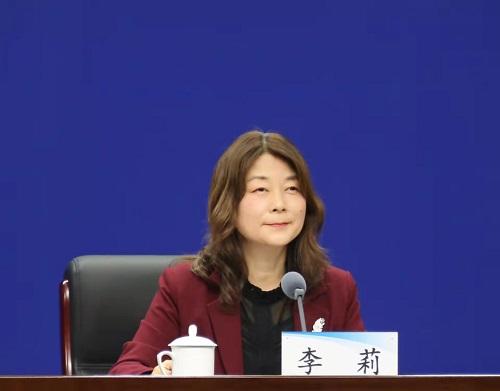
  Li Li, Director of Water Eco-environment Division of Provincial Eco-environment Department

  Thank you for your question. As you mentioned, our province will carry out the creation of "beautiful rivers and lakes", mainly based on the following considerations:

  On the one hand, it is the need for our province to fight the tough battle of water pollution prevention and control. In recent years, our province has thoroughly implemented the decision-making arrangements made by the CPC Central Committee and the State Council on deepening the battle against pollution, and continuously improved the quality of water ecological environment in the province, and achieved positive results. In 2021, among the 160 surface water quality monitoring sections in our province, 127 were Class I-III water quality monitoring sections, accounting for 79.9%, 6.1 percentage points higher than the national target; There is no inferior V water quality section, and the water environment quality continues to improve. However, it should also be noted that the water conservation function is damaged, the ecological buffer zone of rivers and lakes is invaded and destroyed, the wetland area is shrinking, the aquatic ecosystem is degraded, and the aquatic biodiversity is declining. The aquatic ecological situation has become a prominent shortcoming for further building beautiful rivers and lakes. Therefore, after the breakthrough in water pollution prevention and control, it is conditional and necessary to provide more high-quality public ecological products for the people through the creation of beautiful rivers and lakes, and further improve the water ecological environment and urban quality.

  On the other hand, it is the need to implement the national water pollution prevention and control policy. During the "14th Five-Year Plan" period, China’s water ecological environment protection has expanded from the water environment to the overall planning of water resources, water ecology and water environment, and implemented the management of grass and sand systems in landscape forests, fields and lakes. The focus of work has changed from water quality improvement to water ecological protection, and the protection and construction of beautiful rivers and lakes is one of the important measures. In 2021, the Ministry of Ecology and Environment launched the first collection of outstanding cases of beautiful rivers and lakes, and submitted more than 130 cases nationwide. After layers of screening, 18 cases of beautiful rivers and lakes were finally identified nationwide, and Qihe (Hebi section) in our province was among them, which explored the way for the protection and construction of beautiful rivers and lakes in water-deficient areas in the north, provided referential and replicable experience for water-deficient areas, and also made a good start for the creation of beautiful rivers and lakes in our province.

  At present, the work of beautiful rivers and lakes in our province is still in its infancy, and there is still a lack of relevant technical guidance and normative support for the establishment standards and evaluation indicators of beautiful rivers and lakes. At the end of last year, the "14th Five-Year Plan for Water Security and Water Ecological Environment Protection in Henan Province" was issued, which clearly stated "to promote the creation and protection of beautiful rivers and lakes, actively explore the establishment system of beautiful rivers and lakes, and study the evaluation indicators and standards of provincial beautiful rivers and lakes". This year, our province will step up the construction of the index system for the construction of beautiful rivers and lakes and the research and formulation of the selection methods for beautiful rivers and lakes, introduce the selection methods for provincial beautiful rivers and lakes as soon as possible, promote the selection of provincial beautiful rivers and lakes, and publish a number of provincial beautiful rivers and lakes every year. At the same time, actively participate in the collection of outstanding cases of national beautiful rivers and lakes, invite relevant experts to give technical guidance on the basis of voluntary reporting in various places, and jointly with relevant units, carry out on-site verification, evaluation and scoring, and publicly solicit opinions in accordance with the relevant requirements of national beautiful rivers and lakes selection, and then report the best to the Ministry of Ecology and Environment. Through the activities of creating beautiful rivers and lakes, we will continue to promote the utilization of water resources, water ecological protection and water environment management, effectively control the discharge of various pollutants in the basin, and achieve a fundamental improvement or stability in water quality; Accelerate the transformation of high water consumption development mode and the utilization of regional recycled water, and ensure the ecological flow (water level) of rivers and lakes; The ecosystem of rivers and lakes is good, the eco-environmental functions of rivers and lakes and their buffer zones are maintained or restored, the coverage rate of aquatic vegetation reaches an appropriate level, and biodiversity is effectively protected; A long-term supervision mechanism for rivers and lakes has been gradually established.The ecological service function and the value of ecological products have been continuously improved, and efforts have been made to create a number of exemplary beautiful rivers and lakes, restore the rivers and lakes with smooth rivers, clear lakes, green shores and beautiful scenery, and establish a number of beautiful business cards with their own characteristics, so that the construction of beautiful rivers and lakes can become the forerunner of high-quality development in Henan Province and write a brilliant chapter of the Central Plains in the new era. thank you

  China Environmental News reporter

  We have noticed that it is mentioned in the "Plan" that the risk of soil pollution in construction land should be effectively controlled, especially the land whose use is changed to residential, public management and public service land has become the focus of management. Excuse me, what are the specific measures for control? How will we ensure the safety of the living environment and let the people "live with peace of mind"? Thank you.
a state in the Zhou Dynasty

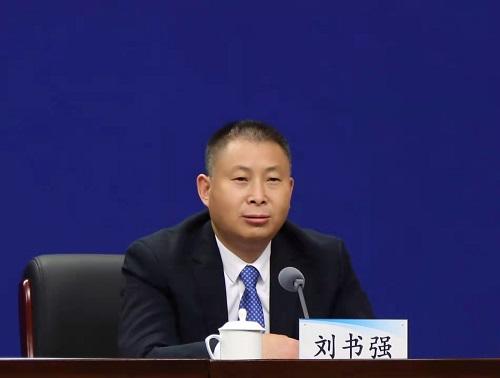
  Liu Shuqiang, Director of Soil Ecological Environment Division of Provincial Ecological Environment Department.

  Thank you very much for your question. Ensuring the safe use of construction land and letting people live in peace of mind is an important ecological environment product related to people’s livelihood. With the acceleration of urbanization in our province, the scale of planned construction land will continue to increase, and chemical production enterprises in densely populated areas will gradually relocate. Once the construction land is polluted, it will be difficult, long-term, costly and there will be environmental risks in development and utilization. Therefore, the management of construction land is an important content of the pure land defense. This year, under the strong leadership of the provincial party committee and the provincial government, together with natural resources, agriculture and rural areas, we will continue to fight the tough battle of soil pollution prevention and control, adhere to prevention first, protection first, classified management and risk control, always put the vital interests of the people first, comprehensively improve the management level of soil environment, and ensure the safe use of construction land to be effectively guaranteed. Focus on the following three measures: First, implement directory management according to law. Strictly implement the soil law, and implement the risk management and control of soil pollution in construction land and the list system of remediation. At present, there are 625 suspected contaminated plots in our province that have completed the pollution investigation, and 10 contaminated plots that are determined to be risky and unacceptable to human health are included in the list. The plots listed in the list shall not be used as residential, public management and public service land. Those who meet the requirements of risk control or remediation can only be developed and utilized after the person responsible for soil pollution and the land use right holder can apply for removal from the list. The second is to strictly implement risk management and control. Focusing on the land whose use is changed to residential, public management and public service land,Promote the responsible subject to carry out the investigation of soil pollution. Strictly control the use of polluted plots, strictly control the planned use of heavily polluted plots in pesticide, chemical and other industries, and encourage them to be used to expand ecological space if they really need to be developed and utilized. Strengthen risk management and supervision of remediation projects, resolutely crack down on illegal disposal of contaminated soil in transit, and effectively control secondary pollution in the process of remediation of contaminated plots. The third is to prevent new soil pollution. According to the regulations on the management of the list of key pollutant discharge units, 1012 key soil pollution supervision units were updated this year, and they were urged to implement legal obligations such as hidden danger investigation and self-monitoring. Promote the green transformation of iron and steel, petrochemical, chemical, leather, non-ferrous metal mining and smelting, electroplating and other industries. Enterprises that find problems in hidden danger investigation can implement pipeline and sealing transformation according to the situation, reduce leakage and prevent soil pollution from the source. thank you

  Yang Guangwang reporter

  There are many villages in Henan province with various forms, and the treatment of domestic sewage has always been the key and difficult point in the improvement of rural human settlements. Excuse me, how do we consider the next step in promoting the treatment of rural domestic sewage in the province? Thank you.

  Wang Chaojun, member of the Party Group and Deputy Director of the Provincial Department of Ecology and Environment.

  Thank you for your questions. The people’s yearning for a better life is our goal. With the continuous promotion of the rural revitalization strategy, agriculture has become stronger, farmers have become rich and the countryside has become beautiful. However, the people’s requirements for the living environment are getting higher and higher, especially for domestic sewage treatment, toilet renovation and garbage removal.

  The Central Committee of the Communist Party of China and the State Council issued "Opinions on Deepening the Fight against Pollution", which put forward clear requirements for the treatment of rural domestic sewage, which is an important part of improving rural living environment.

  In recent years, under the leadership of the provincial party committee and the provincial government, the Provincial Department of Ecology and Environment has closely focused on the rural revitalization strategy, combined with the situation of Henan Province, and actively explored new governance paths oriented to source reduction, classified disposal and resource utilization. Up to now, the treatment rate of rural domestic sewage in our province has reached 34%, ranking in the forefront of central and western provinces; During the 14th Five-Year Plan, we plan to increase the rural domestic sewage treatment rate by three percentage points every year. By the end of the 14th Five-Year Plan, the rural domestic sewage treatment rate in our province will reach 45%.

  Since the "Thirteenth Five-Year Plan", 10,607 villages in our province have completed environmental renovation. The renovated villages must meet the following three standards: first, the treatment rate of rural domestic sewage is over 60%, second, the treatment rate of black and odorous water bodies is over 80%, and third, the completion rate of standardized renovation of centralized drinking water sources is over 80%. Up to now, the renovated villages in our province account for about 23.3% of the 45,000 administrative villages in the province. Through unremitting efforts in recent years, This year, we will focus on four aspects:

  The first is to improve the governance system. Adhere to the integration of urban and rural areas, take the city as the driving force, and guide all localities to accelerate the construction of a governance system led by the county-level government+the construction and operation of professional companies+the unified supervision of the ecological and environmental departments. Pay attention to the promising government and effective market, encourage all localities to rely on urban sewage treatment plants or select professional companies to be responsible for the operation and maintenance of rural domestic sewage construction, promote the unified planning, unified construction, unified operation and unified management of rural domestic sewage treatment, and continuously improve the unified, professional and market-oriented level of rural domestic sewage treatment.

  The second is to highlight key areas. In line with the development trend of new urbanization, our province is considering giving priority to rectification in five aspects: First, the township government is located, and the township government must implement centralized treatment of domestic sewage. Up to now, there are still 608 towns and villages in our province that have not achieved centralized treatment of sewage, and the province requires that by the end of next year, the 1,788 towns and villages in the province must achieve full coverage of domestic sewage treatment facilities; Second, there are primary and secondary protected areas on both sides of the main canal of the Middle Route of South-to-North Water Transfer Project. According to statistics, there are still 774 villages in the primary and secondary protected areas on both sides of the main canal of the Middle Route of South-to-North Water Transfer Project with imperfect sewage treatment facilities, so we should increase the control efforts in stages. Third, along the main and tributaries of the Yellow River. According to statistics, there are 55 township governments located along the main and tributaries of the Yellow River that have not built centralized sewage treatment facilities. The province requires that construction must be started this year and completed in the first half of next year. Fourth, the urban-rural fringe; Fifth, scenic spots.

  The third is to adhere to local conditions. Guide all localities to fully consider their own level of economic and social development, and do not go beyond the development stage to engage in large-scale financing and construction, or blindly copy the urban model to seek foreign countries. Do what is accurate first, wait for what is not, and strive for progress steadily, seeking good but not seeking fast. Sewage treatment should be centralized and decentralized, and the technical mode with low cost, simple maintenance and effective treatment should be optimized, and the sewage resource utilization combined with agricultural production should be actively promoted. Villages around the town should be brought into the urban sewage pipe network for centralized treatment; Villages with high population concentration and high water quality discharge requirements adjacent to drinking water sources should be treated centrally; Villages with scattered residence and less sewage production can focus on improving toilets and realize local recycling.

  The fourth is to strengthen operational management and protection. We will focus on the classified rectification and upgrading of rural domestic sewage treatment facilities that are not operating normally, combine problem rectification with sound long-term mechanism and post-disaster reconstruction, and establish "three accounts" for facilities that have been upgraded and upgraded, facilities that have not been upgraded and facilities that have been damaged by water, with one station, one meter, account and sales number, and classified policies. We will promote the establishment and improvement of the operation and maintenance management mechanism of sewage facilities in various places through problem rectification, and strive to achieve a normal operation rate of 90% by the end of 2023 and after 2019.

  Although some achievements have been made, our province is a big agricultural province, with a large rural population, weak foundation and little security, which needs to be further strengthened. Taking this opportunity, I also hope that all sectors of society will continue to support, care and help the rural domestic sewage treatment work in our province and make the rural construction in our province more beautiful and livable. Thank you!

  Chang Yiyuan, Director of Press Release Office of Propaganda Department of Provincial Party Committee

  Thank you for your questions, and thank you for your detailed introduction! That’s all for today’s on-site questions. If you have any other questions you need to know, you can contact the Provincial Department of Ecology and Environment after the conference.

  Dear friends, a good ecological environment is not only natural wealth, but also economic wealth, which is related to the potential and stamina of economic and social development. Through today’s press conference, I believe everyone knows that the Plan not only provides strategic support for our province to fight for the defense of blue sky, clear water and pure land with high standards, but also has great significance for ensuring the high-quality construction and modernization of Henan during the 14 th Five-Year Plan period. Here, I hope that the news media can continue to pay attention to the construction of ecological civilization in our province, vigorously publicize the highlights and achievements of the construction of a strong ecological province, guide the society to form an ecological protection pattern in which everyone participates and builds together, and create a good atmosphere for building a beautiful Henan where man and nature coexist harmoniously.

  This concludes today’s press conference. Thank you again, journalists and friends! Thank you publishers! Goodbye.
Ministry of Industry and Information Technology: In the first quarter, the number of complaints about financial harassment calls was the highest.

  (Reporter Ren Xiaoyuan) According to the news of the Ministry of Industry and Information Technology yesterday, the Ministry of Industry and Information Technology announced the relevant data of the 12321 Reporting Center. In the first quarter of this year, the number of complaints reported by port SMS was still at a high level. The number of complaints reported by port spam messages was 62,132, down 3.0% from the previous month, accounting for 71.2% of the total; The number of complaints reported by peer-to-peer SMS in mobile resale enterprises increased overall, and the number of complaints reported by SMS was 13,209, up 53.4% from the previous month.

  In terms of spam messages, information complaints such as loan financing, retail sales promotion and game promotion account for about 72.9%; Illegal financial activities, illegal sale of bills/certificates, suspected sexual violence and other illegal contents accounted for about 27.1%. In terms of geographical distribution, the top five regions that send spam messages are Guangdong, Jiangsu, Anhui, Shandong and Beijing; The top five areas most harassed by spam messages are Guangdong, Shandong, Jiangsu, Zhejiang and Hubei.

  In terms of harassing phone calls, the number of complaints reported by 95/96 business in the first quarter showed an increasing trend, with 38,541 complaints reported, up 35.4% from the previous month, accounting for 18.4% of the total; There were 98,638 complaints about harassing phone calls, accounting for 47.1% of the total; The number of complaints about "calling you to death" harassing calls continued to grow, reaching 10,834, up 17.9% from the previous month. Among them, mobile resale enterprises accounted for 34.8% of the reported complaints.

  In terms of the content of harassing phone calls, the number of complaints and reports about harassing phone calls for loan financing was the highest in the first quarter, and others, including real estate agents, illegal collection, stocks and securities, were also in the forefront. From the way of dialing, manual harassment still occupies the first place, accounting for about 69.6%, followed by recording telephone calls and ringing, accounting for about 17.3% and 6.7% respectively.

  The Ministry of Industry and Information Technology pointed out that the mobile phone number operators who send spam messages in violation of regulations will take the following measures: stopping (stopping communication services), blacklisting spam messages (not sending short messages), and stopping short messages (not sending and receiving short messages). For ports that illegally send spam messages, the disposal methods can include: closing the port, shielding users, business rectification, etc.

  The Ministry of Industry and Information Technology also pointed out that users who receive spam harassment can report to the 12321 Reporting Center. The reporting methods include: 12321 official website, SMS, telephone, APP, WeChat official account, and other channels including WeChat, mobile QQ, Alipay city service page, etc. Just click "Report Bad Information on the Internet".

Iranian Rouhani under US sanctions: Unity will make Americans regret it.

  CCTV News:On August 6, US sanctions against Iran came into effect again. Bloomberg pointed out that under this round of sanctions, Iran’s economy is close to the brink of crisis. The Iranian currency Rial has been falling all the way, and domestic grievances have accumulated. In recent days, people’s demonstrations broke out in the streets of Tehran, Isfahan, Hamadan and other cities in Iran.

  Iranian young people satirize the current domestic problems in Iran on social media. The Iranian youth showed that the Iranian currency Rial with a denomination of 10,000 was rapidly shrinking. In the shadow of sanctions, the Iranian currency Rial plummeted. People have expressed their dissatisfaction.

  Iranian peoplePeople have the right to protest that economic and social problems are all related, and how much more can we bear when people are under great pressure.

  Iranian protestersLet’s build our country with our hands. Don’t be afraid, as long as we unite with domestic and foreign forces.

  Rouhani’s government is under unprecedented pressure, and Rouhani himself is constantly being questioned by the Iranian parliament. Qatar Al Jazeera commented that the United States hopes that Iran will achieve regime change through civil strife.

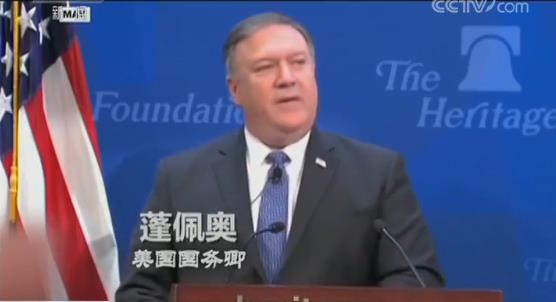
  US Secretary of State PompeoIt’s time for the Iranian regime to look in the mirror. The Iranian people urgently need economic, political and social changes.

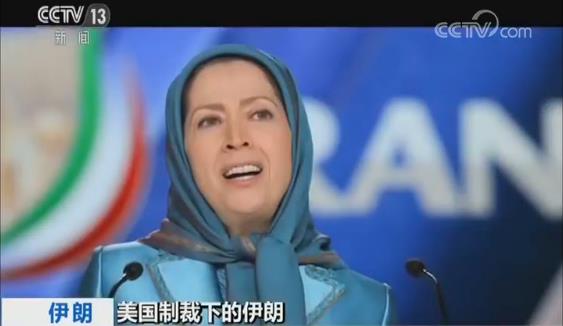
  According to the British "Guardian" report, the United States has close contacts with Iranian opposition organizations in exile. Rajavi, leader of the exiled Iranian opposition "People’s Mujahideen Organization of Iran" (MEK). She advocates regime change in Iran. It is reported that US national security adviser Bolton met with Rajavi in Paris in 2017 and said that the United States supports regime change in Iran and hopes to reunite with the organization in 2019. Some media have linked this time of the ultimate sanctions to be introduced by the United States in November with the date of 2019.

  The Guardian noted that the Iranian People’s Mujahideen Organization has long been listed as a terrorist organization by Iran, the United States, Canada and the European Union. According to the statistics of the US Department of Justice, since the Iranian revolution in 1979, terrorist attacks in MEK have caused at least 10,000 civilian deaths. On August 7th, Iranian President Rouhani responded.

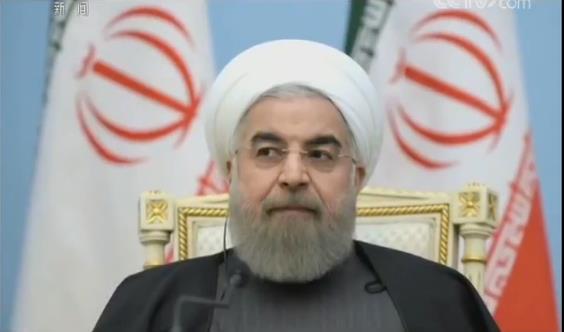
  Iranian President RouhaniI think if we can unite as one, we can make Americans regret it soon. If we can successfully cooperate well with other countries in the world, Americans will realize that their sanctions are ineffective and will come back sooner. "

  In response to people’s demands, the Rouhani administration arrested the deputy governor of the Iranian central bank in charge of foreign exchange, and stopped buying non-essential goods to reduce the consumption of foreign exchange.

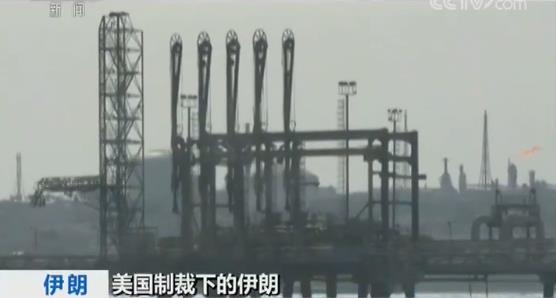
  Facing the most influential oil trade, the Rouhani administration lifted the state monopoly on oil trade and allowed private channels to buy and sell oil, because the US sanctions mainly targeted Iranian government agencies and officials.

  In the transactions with Turkey, India and some African countries, the US settlement is circumvented by barter or local currency settlement. Iranian businessmen also evade sanctions by purchasing overseas nationality and registering companies overseas. The external pressure from the United States has also made many political elites and people vigilant.

  Tehran citizen AryanTrust in America will lead to nothing but failure. We must rely on our own strength.

How to write a graduation thesis? What are the steps of graduation thesis writing?

Graduation thesis is a thesis written and submitted by college students before their studies are completed, and it is one of the important parts of teaching or scientific research activities. Here papertime shares with you the top ten steps of graduation thesis writing, hoping to help children’s shoes with their thesis writing. If children’s shoes are faced with the problem of revision in the process of writing the first draft, it is suggested to download the personal version of papertime client, and check, modify and reduce the weight for free, so as to successfully pass the duplicate checking test of school papers.

(A) the basic structure of the paper

A thesis is an argumentative one, and its basic structure generally includes three parts: topic, argument and conclusion.

1. Thesis: refers to the proposition that the authenticity of the paper needs to be proved.

2. argument: that is, discuss and prove. It mainly refers to the discussion process of citing arguments to prove the authenticity of the topic, and it is a form of reasoning used when the topic is deduced from arguments.

3. Conclusion: The conclusion is the final judgment of the article. Its main functions are:

(1) Summarize the full text and point out the theme.

(2) Looking to the future and enhancing confidence.

(3) express feelings and enhance appeal.

(B) the composition of the paper

A complete paper should include the following contents:

1. Title (Title)

The title of the paper should reflect the logical combination of the most important specific content in the paper with the most appropriate and concise words, and avoid using uncommon abbreviations to omit words, characters, codes, symbols and formulas as much as possible. The title of a paper generally does not exceed 30 words.

2. Name and unit of the author

The signature of the paper includes: those who participated in the selection of research topics and the formulation of research plans, those who directly participated in all or the main part of the research work and contributed, and those who participated in the writing of the paper. If the paper is jointly completed by two or more people, the ranking should be arranged according to the contribution of each person or according to the agreement.

3. Abstract of the paper

Abstract is a brief statement of the content of the paper, prompting the main points, opinions and arguments of the paper or briefly introducing the main contents of the paper. The text should be concise and accurate. Generally, 200~400 words are suitable for Chinese abstracts of papers, and important academic papers should not exceed 1500 words.

4, keywords (or keywords)

Keywords refer to words or terms used to express the theme information of the full text of the paper, which are used for data query. Generally, 3 ~ 5 words are selected as keywords for each paper.

5. Outline

An outline refers to the main points of a paper.

6. Introduction (or introduction, preface, introduction, introduction, preface and introduction)

Introduction is the beginning of the paper. A complicated and lengthy paper, called "introduction" and "preface", requires a clear explanation of the motivation, content, significance and purpose of writing this article. It is mainly used to briefly explain the content, purpose, method and significance of the research problem, clarify the main points of the full text (article arguments), draw lessons from the research situation, knowledge layout and theoretical basis of predecessors and others in the accounting field, and put forward the author’s own research ideas and research methods for the inheritance and development of accounting theory and practice, the expected results and practical significance. If it is an investigation report, you can also explain the background and explain the investigation method. This part of the content has the function of "outlining", which is intended to summarize and lead the full text, but the words should be "less but better". In the text, there is no need to write the word "preface". Generally, one paragraph is written, and some people write two, three or even four paragraphs. After writing, when turning to this theory, it is best to leave a line blank in the middle.

7. Text

The text is the core part and the main part of the paper, and its function is to expand the topic, analyze and demonstrate. The content of the text is to deeply analyze the questions raised in the introduction of the article, analyze and demonstrate by combining theoretical research with practical operation, and reveal the intricate internal relations and laws of objective things in various professional fields. The content of the text reflects the logical thinking and language expression ability of the article, which determines the intelligibility of the paper and the persuasiveness of the argument. The writing of the text must be realistic, objective and true, well-prepared, clear in thinking logic, distinct in levels and easy to understand.

There are three forms of hierarchical structure used in writing the text:

1. Linear inference mode. Starting from the central argument of the article, it is discussed in depth layer by layer, and the logical deduction from one point to another shows a linear logical depth.

2. The way of juxtaposition. Put several subordinate arguments subordinate to the basic topic side by side and discuss them separately.

3. The way of combining linear inference with parallel theory. That is to say, the straight line theory contains the parallel theory, and there are straight line inferences under the parallel theory, forming a complex three-dimensional structure.

The main body of a paper usually adopts the structural level of the third way (that is, the combination of straight-line inference and parallel inference). It should be reminded that the quotations in the text of the paper should be reasonable and standardized, otherwise the duplicate checking system will judge them as similar, which will improve the repetition rate of your paper.

8. Concluding remarks

At the end, the article should stop at the end, take care of the beginning and reflect the integrity of the full text. The full text is seamless and echoes from beginning to end, which can not only give people a sense of structural integrity, but also receive the effect of summarizing the full text, highlighting the center and deepening the reader’s impression. There are three kinds of endings: summative ending, explanatory ending and summative ending.

The words "conclusion" and "conclusion" need not be written in the text, depending on the genre and content of the paper. The beginning of the reference should be an independent part, and there should be a blank line between it and the previous paragraph; If the upper branch stops in classical Chinese, there is no need to leave a blank line, which is equivalent to stopping when the words are exhausted, and there is no end of the full text.

9. Words of thanks

The words of thanks can be placed as "footnotes" at the bottom of the first page of the article or at the end of the article. Words of thanks should be sincere, concise and appropriate.

10. References

References (materials) are attached to the back of the paper, and more should be listed on additional pages, at least four lines away from the end of the paper. There are two ways to write documents cited in papers: direct citation and indirect citation. Quoting the original text directly requires quotation marks; Indirect quotation is just a paraphrase of the general idea, also known as intentional quotation, without quotation marks. For the content of the quoted article, be faithful to the original text, and don’t take it out of context for my use; Can’t be inconsistent and far-fetched; In writing a paper, the author should express his views on the quotation, and his position is the attitude of praise or opposition.

1. List the functions of references

(1) it is to respect the original author and avoid the suspicion of robbing others of beauty, which also shows that the author is rigorous in his academic attitude.

(2) If there are errors in the citations, it is convenient to check them in time.

(3) To enable the instructor to clearly understand the depth and breadth of the author’s research on the problem.

(4) It reflects the scope and level of the materials that the author read for writing the thesis.

(5) It is helpful for readers who study the same or similar topics to understand the situation or be inspired by the reference materials.

(6) It is convenient to review and evaluate the graduation thesis defense.

2. List the specific requirements of references (materials)

(1) according to the graduation thesis reference or citation of articles and materials in order.

(2) The listed references should generally be official publications (including books, newspapers and magazines).

(3) To indicate the serial number, the name of the author (editor, translator), the title of the book or the title of the article in the newspaper and magazine, the publishing unit (or the name of the newspaper and magazine), the publishing time (number of magazine issues, number of newspaper editions), etc.

How to apply for green code for Alipay health code Alipay health green code application steps

How to apply for green code for Alipay health code? Many friends don’t know how to operate. The following small series will introduce the application steps of Alipay Health Green Code. Interested friends come and have a look.
 

        How to apply for green code for Alipay health code Alipay health green code application steps

      Now, during the operation, Alipay or WeChat have launched a green code service, which can facilitate our travel.

      1. After opening Alipay, click more options on the home page.

      2. Then find the city service in the recent use and choose him.

      3. Then you can see your health code, click Click Now below,

      4. Click to view immediately according to the prompt.

      5. Then there is a user authorization agreement, click Agree,

      6. Confirm your information and click Submit.

      7. Finally, click to withdraw immediately, and then you will be asked to fill in some personal information to get your password.


From the North Pole to the Universe, The Adventure of the Haier Brothers Universe has been launched.


1905 movie network news Twenty-three years ago, the animated film Haier Brothers came out, which became the first popular science animated feature film in China, and made a great contribution in the history of original animation in China. Twenty-three years later, the new animated film "The Adventure of Haier Brothers" moved the story background to the space and continued to lead a new generation of children and audiences to explore unknown mysteries. The play premiered on Tencent Video, Iqiyi and other platforms on September 17th, and was updated at 16:00 every day from Monday to Friday.


Stimulate imagination and explore spirit


The Haier brothers once crossed the North Pacific Ocean, went deep into the Arctic, got to know Eskimos, witnessed the wonderful phenomena of nature such as extreme daylight and mirage with their own eyes, and completed a global adventure with friends. This cartoon has far-reaching educational significance, is entertaining and won the audience’s love. It won the Golden Boy Award and the Golden Eagle Award successively, and became an excellent original children’s cartoon in China in the 1990s.


In this new animation, the Haier brothers remain unchanged, and as always, they stick to the main line of transmitting knowledge and inspiring imagination, and take accompanying children to grow up healthily as their mission. Haier Brothers Cosmic Adventure focuses on knowledge and exploration, not telling children the standard answer or "what", but encouraging children to actively seek knowledge and explore "why". In the Haier Brothers’ world, every child is "unique", and the purpose is to respect children’s interests, stimulate their imagination and exploration spirit, and let them develop their personality and wisdom.


This time, the Haier brothers are going to explore the vast universe, get in touch with powerful intelligent creatures and alien civilizations, and lead children to see more cutting-edge technology, which will greatly broaden their horizons. At the end of each cartoon, there is a small knowledge class, such as "How big is the universe" and "What is a nano-robot", which transforms the storyline mentioned in the feature film into small knowledge of popular science. This knowledge transfer based on the plot is more enlightening than blunt indoctrination, which can be described as the integration of wisdom and interest, which will greatly broaden children’s knowledge and acceptance.


Realize self-transcendence


Haier brothers subverted the traditional creative mode.Before the production of "Haier Brothers Cosmic Adventure", it was convenient to interact with small audiences on the material, character design and content of the animation, and went to primary schools and kindergartens in many cities to have face-to-face communication with children, and guided the design and production of cartoons according to the voting results. This kind of interactive creation subverts the closed production mode of traditional cartoons, connects producers and users, draws inspiration and suggestions from the target audience, and creates fine products that the audience loves and recognizes.

China CDC issued "May 1" holiday health tips | When returning from the holiday, self-observation experts should pay attention to these tips.

  CCTV News:The "May Day" holiday is coming to an end, and many people who have gone out to travel have begun to return. The "May Day" holiday health tips issued by China CDC recently pointed out that the public should continue to do a good job of self-health monitoring during the trip, and should return to self-observation for 14 days. Once abnormal symptoms appear, they should take measures to prevent others from being infected, seek medical advice in time and take the initiative to inform doctors of their travel history.

  Wu Zunyou, Chief Epidemiologist of China CDC:Observing yourself for 14 days is during the journey, because you have contacted many people, and you don’t know the situation of some people. Are there asymptomatic infected people in it, or some infected people have no symptoms at that time? You may be infected when you come into contact with them in the process, and you should consider yourself as likely to be infected after returning. It should be noted that on the one hand, it is necessary to observe the changes in one’s physical condition, on the other hand, it is also necessary to protect oneself and be responsible for society by minimizing contact with more people and reducing such behaviors as dinner and gathering. After returning from a trip, what should self-observation pay attention to? See if there is any fever, body temperature, diarrhea, symptoms that he can feel, or he feels particularly tired, which is different from the usual fatigue before. If this happens, it can’t be relieved or terminated soon after observation, so he needs to go to the doctor at this time. These are all things that should be paid attention to after you come back from your trip.

Analysis on the Development Trend of Furniture Industry in China: The estimated growth rate in the next few years is 15%.

Rhapsody of explosion of home building materials

Original title: Analysis of the development trend of furniture industry in China: the estimated growth rate in the next few years is 15%.

At present, the furniture industry in China has entered a relatively stable growth period, and the growth rate is expected to remain at around 15% in the next few years. The industry is shifting from export to domestic sales; Low-end demand is still huge, but high-end and personalized demand has begun to rise; Some sub-industries tend to be concentrated. We believe that companies with sinking channels and high brand awareness will have advantages in the future. In addition, the growth rate of custom furniture companies will be faster.

  The growth rate of furniture industry is becoming more and more stable, and furniture enterprises are transforming the domestic market.

  The extensive export-oriented growth has left, and furniture manufacturers have increased the domestic market.

  In 2003, the national real estate investment exceeded 1 trillion yuan for the first time, so the furniture industry ushered in the best era. However, the high-speed growth of China’s furniture industry came to an end after the global financial crisis in 2008. Affected by factors such as reduced export demand, rising raw material prices, appreciation of RMB, and decline in export tax rebate rate, furniture enterprises were hit, and the furniture industry entered a more gentle and stable growth period. In 2009, the export delivery value of furniture manufacturing industry decreased by 6.98% year-on-year, which had a great impact on the industry. Many furniture enterprises began to implement the dual-track system of export and domestic sales, and gradually increased the domestic market.

  Compared with the growth rate of more than 25% in almost every year from 2003 to 2007, the growth rate of output in the last three years is more stable, with CAGR of 17.8%. According to Zhu Changling, chairman of the Furniture Association, in 2012, the total output value of China’s furniture industry reached 1.13 trillion, making it the largest country in furniture production and consumption in the world. According to the revised data of the National Bureau of Statistics, from 2011 to 2013, the total sales of furniture manufacturing companies above designated size in China were 496.68 billion, 565.42 billion and 646.28 billion respectively, with year-on-year growth rates of 25.71%, 13.84% and 14.30% respectively. The CAGR for three years was 17.8%, and the total profit was 299.

  The low growth rate of exports and the high growth rate of domestic sales offset each other, and the scale of the industry entered a period of gentle growth. In 2013, real estate sales picked up, and the growth rate of sales area in that year reached 17.3%, much higher than in previous years. Even so, the growth rate of furniture sales has not been significantly improved, mainly because of exports. In 2013, the growth rate of exports was only 6.94%, which lowered the total growth rate, while the growth rate of domestic sales was 16.77%. In the first half of 2014, the sales growth rate of furniture industry was 12.87% and the profit growth rate was 17.32%. According to the growth rate of 12.87%, the furniture sales volume in 2014 is estimated to be 729.5 billion, which is slightly lower than that in 2013. We believe that China’s furniture manufacturing industry has entered a stage of steady growth, and the growth rate will be maintained at around 15%, and there will be no large fluctuations in the total amount in the short term.

  From the perspective of the proportion of import and export, China’s furniture industry is less and less dependent on exports, and the proportion of domestic sales is increasing. Since 2008, the export volume of China’s furniture manufacturing industry has declined every year. In 2013, the proportion reached a low of 23.49%, which was more than 13 percentage points lower than the proportion of 37% in 2008. In the first half of 2014, China’s furniture export delivery value was 78.35 billion yuan, accounting for 23.87%. According to previous years’ experience, the proportion of export delivery value in the first half of 2014 was generally higher than that in the second half. Therefore, we predict that the proportion of exports in 2014 will be around 22.37%, which is 1.12 percentage points lower than that of 23.49% in 2013.

  Wooden furniture takes the lead, accounting for over 60%.

  According to the Classification and Code of National Economic Industries issued by the National Bureau of Statistics, China’s furniture manufacturing industry can be divided into five categories according to varieties, namely, wooden furniture manufacturing, bamboo and rattan furniture manufacturing, metal furniture manufacturing, plastic furniture manufacturing and other furniture manufacturing. Furniture owners in China mainly rely on wooden furniture, accounting for more than 60%.

  The marketing model is mainly based on distribution and joining, supplemented by direct sales.

  China’s furniture manufacturing enterprises export mainly in ODM/OEM mode. The domestic sales model is mainly based on distribution and joining, and the proportion of direct stores is small. Even some large enterprises are far behind foreign countries in the construction of direct stores. Among the four China furniture companies we counted, Yazhen, a high-end furniture manufacturer, has the highest proportion of direct stores, accounting for 17.5%, which is still lower than the three American companies.

  The increase in income promotes the transformation of demand to a high level, and high-end furniture manufacturers welcome the opportunity.

  Income, real estate and export are the main reasons for demand, and urbanization promotes the steady growth of the industry.

  Based on the data from the third quarter of 2011 to the first quarter of 2014, through regression analysis, we found that the sales area of commercial housing, urbanization rate, per capita disposable income of urban population and export volume all have significant positive effects on furniture sales, and the per capita income of rural residents has almost no impact on furniture sales. Among them, the growth of urban residents’ total disposable income has the greatest impact on furniture income in the past three years, which has led to a total increase of 19.6%, the growth of furniture exports has led to a total increase of 17%, and the growth of real estate sales area has led to a total increase of 10%.

  Urbanization and per capita income are improving, which is the biggest driving force for future demand growth.

  Since 2011, China’s urbanization rate has increased by more than 1% every year, reaching 53.73% in 2013. According to the goal of "National New Urbanization Plan (2014-2020)" issued by the State Council in early 2014, China’s population urbanization rate will reach 60% in 2020. In addition, the Plan also calls for the promotion of basic public services such as compulsory education, employment services and affordable housing, so as to solve the problems that it is difficult for agricultural migrants to integrate into urban society and the quality of urbanization is low. If these requirements are implemented, the quality of urbanization will be improved, and the consumption power of new urban population will be improved, which is conducive to furniture consumption demand.

  The per capita disposable income of urban residents in China is increasing at a rate of about 10% per year. In 2013, the per capita disposable income of urban residents in China reached 26,955 yuan. From the historical experience of the furniture industry in developed countries, furniture consumption will rise sharply and last for a long time after the per capita income reaches 3,000 US dollars, while the per capita disposable income of urban residents in China exceeded 3,000 US dollars in 2011, so we think that this period will be a time when urban residents pay more attention to furniture consumption, and in this respect, the furniture demand in the domestic market will be improved.

  Real estate is mixed, and second-and third-tier cities are better than first-tier cities.

  In 2013, China’s real estate sales area reached 1,305.51 million square meters, an increase of 17.3% compared with 2012, much higher than the previous two years. Correspondingly, the growth rate of furniture sales in 2013 also increased to 14.3%. In the first half of 2014, although the sales area of real estate fell again, the sales area of 40 major cities decreased by 6% compared with the same period in 2013, but if the effect of large base in 2013 was removed, the sales area in the first half of 2014 still increased by 21% compared with the same period in 2012. Among them, the sales area of first-tier cities performed poorly, increasing by 8% compared with the same period in 2012, while the second-and third-tier cities performed well, increasing by 18% and 28% respectively compared with the same period in 2012. At present, the purchase restriction policies in second-and third-tier cities have begun to relax, while those in first-tier cities have not. We believe that the relative prosperity of real estate in second-and third-tier cities will make the demand for furniture in second-and third-tier cities grow faster, and the sales of furniture enterprises whose target markets are second-and third-tier cities will also grow faster.

  The slowdown in export growth does not hinder the overall demand growth.

  In the past three years, the annual growth rate of China’s furniture exports is very small, CAGR is 7.27%, and the proportion of exports to total sales is decreasing year by year, 26.82%, 25.11% and 23.49% respectively. The main exporting country of China’s furniture is the United States. At the same time, the current furniture imports of the United States mainly come from China, and the amount of furniture imported from China accounts for 56.4% of its total furniture imports and 21% of its total furniture consumption. In the long run, the export competitiveness of China furniture enterprises has weakened due to the increase of wages, electricity charges and other raw material prices in China, the reduction of export tax rebates and anti-dumping duties. From 2009 to 2011, the furniture import situation in the United States was not optimistic. Among its furniture suppliers, the furniture supply increased fastest in Vietnam, with an average increase of 15.3%, followed by Mexico and Taiwan, China, and Chinese mainland ranked fourth, with an increase of 9.9%. It can be seen that the share of China furniture in the US import market is slowly decreasing.

  Although the export growth rate is slow, the strong domestic demand supports the steady growth of total demand. According to the quarterly data, we get the formula of the relationship between the annual sales of furniture and real estate, urban income and export volume. We estimate that the sales area of commercial housing in 2014 will be 1,240.23 million square meters, the total disposable income of urban residents will be 22,718.8 billion yuan, and the export volume will be 160.3 billion yuan. Therefore, the furniture sales in 2014 will be 724.73 billion yuan, an increase of 12.14% compared with 2013, which is consistent with the year-on-year growth rate of sales in the first half of the year.

  The demand of domestic furniture industry is polarized, which will be "dumbbell-shaped"

  With the growth rate of disposable income of urban households and exports relatively stable, the scale of furniture industry is closely related to real estate. We predict the population distribution in 2030 according to the mortality rate and birth rate, and point out that the number of people aged 20-44 (the main buyers) has reached its peak, and the proportion will drop from 33% in 2010 to 24%, and the proportion of people aged 25-35 (the main buyers of the first suite) will also drop from 15% to 9.

  From this point of view, it is difficult for the total demand of the whole furniture industry to increase continuously in the next fifteen years. Enterprises need to seize the changes in demand types and levels, find new ways to improve profits, and pay attention to potential sub-sectors is king.

  Domestic furniture demand will change from "pyramid" to "dumbbell"

  Due to the low per capita consumption level of furniture and the long-term dependence of furniture manufacturing enterprises on exporting a single variety of furniture, the overall grade of China’s furniture industry is low, showing a pyramid shape. About 80% of furniture enterprises are small and medium-sized enterprises, producing and selling low-grade furniture. However, this phenomenon is changing. On the one hand, with the increase in the number of high-yield people in cities, the demand for furniture in star-rated hotels and the upgrading of consumption concepts, the demand for high-grade furniture and personalized furniture has gradually increased. On the other hand, the development of urbanization leads some low-yield rural population to enter cities, which brings a new round of low-end demand to the furniture industry.

  The increase of star-rated hotels and the mass affluent class brings opportunities for the high-end furniture industry.

  Star-rated hotels continue to grow, and the demand for replacement furniture is about to peak. Star hotels are a major source of consumption demand for high-end furniture. The number of five-star hotels in China increased from 302 in 2006 to 739 in 2013, and the CAGR was 12.85%. The number of four-star hotels increased from 1,369 in 2006 to 2,361 in 2013, with a CAGR of 9.46%. We divide the demand of star hotels for furniture into:

  1) New furniture demand. Since 2006, five-star hotels and four-star hotels in China have added 19,300 sets of rooms annually, and 27,800 sets of rooms annually. We estimate that each set of furniture in five-star hotels costs 100,000 yuan and each set of furniture in four-star hotels costs 60,000 yuan, so the average annual demand for new furniture in these hotels is 3.6 billion yuan.

  In July, 2014, Premier Li Keqiang presided over the the State Council executive meeting, determined the policies and measures to promote the reform and development of tourism, and proposed to strengthen the driving force of tourism development, increase investment in infrastructure, and vigorously develop the elderly, folk customs and health tourism. Therefore, we expect that the construction of star-rated hotels will continue.

  2) Replace the furniture demand. Generally, four-star and five-star hotels are required to change furniture once every five years. According to this frequency, we predict that China is about to usher in a wave of demand for furniture replacement. In 2013, the demand for furniture replacement in star hotels in China will be about 5.2 billion, and in 2017, we expect that the demand for furniture replacement in star hotels in China will be nearly 13 billion.

  The increase in the number of wealthy people in China provides a foundation for the development of high-end furniture. The number of affluent people in China was 11.97 million in 2013, and it is expected to reach 14.01 million in 2014, up 17.04% year-on-year, with a rapid growth rate. Among them, most people are in the age of the main group of buyers, accounting for 53.6% of the people under 40, and over 80% under 50. In addition, their children are younger, accounting for 34.2%, 32.5% and 24.4% under 10 years old, 10-20 years old and 20-30 years old respectively. This age structure that the number of people decreases with age makes the demand for wedding furniture increase year by year.

  The change of consumption concept and finely decorated houses jointly promote the scale growth of customized furniture industry.

  Custom-made furniture is tailor-made, personalized design, and large-scale and standardized production of furniture. Although custom-made furniture has entered the domestic market for more than ten years, it still belongs to a new industry, accounting for about 10% of the total furniture market share, with great development potential. Custom-made furniture well meets the difference between the use space of furniture and the individual needs of users. With the younger age structure of furniture consumers, individual needs have become the first appeal of decoration, which also brings opportunities to custom-made furniture manufacturers.

  According to the White Paper on the Development and Consumption of Customized Household Industry in China in 2013 issued by the Solid Wood Customization Committee of the Furniture and Decoration Industry Chamber of the All-China Federation of Industry and Commerce, at present, among about 100 million urban households in China, the ownership rate of the whole kitchen, cloakroom and private wine cellar is only 6.8%, far below the average level of 35% in developed countries in Europe and America. In addition, about 29% of urban households said that they would buy and install the whole home in the next three to five years. In the next five years, the total demand or intentional purchase of customized homes in China will be about 29 million sets, with an average of 5.8 million sets per year.

  Hardcover brings opportunities for overall custom furniture. The proportion of hardcover houses in China is relatively low, and the average proportion of fine decoration in China is less than 10%. In 2011, the proportion of hardcover houses in Beijing and Shanghai was around 21%, and that in Guangzhou was 32.9%, far below 80% in developed countries, which has broad room for improvement. From 1966 to 1975, Japan experienced the golden period of residential fine decoration and industrialization, which was driven by three main factors: 1) the post-war generation had higher requirements for urban housing conditions and decoration; 2) The rising labor cost of decoration makes batch decoration the only way; 3) Policy promotion. These three driving factors are consistent with China’s current situation. The rising income of urban residents has higher and higher requirements for housing, the increase in labor costs and the encouragement of the Ministry of Housing and Urban-Rural Development for finely decorated housing will drive the development of finely decorated housing in China. In 2012, among the projects of major real estate developers in China, the proportion of fine decoration projects exceeded 50%.

  The increase in finely decorated houses means an increase in the demand for overall customized furniture. At the same time, selling furniture directly to large customers such as real estate developers saves the marketing management expenses of enterprises. We expect this to become a big profit growth point for customized furniture manufacturing enterprises.

  The demand for low-end furniture is still the cornerstone of China’s furniture market.

  The huge scale of the low-end market is the present situation of China’s furniture industry. Affected by urbanization, a large number of rural people with low consumption capacity will enter cities, which will provide impetus for new low-end demand.

  The industry pattern is loose and there are many opportunities for leading enterprises.

  Judging from the trend and external conditions, the furniture manufacturing industry has gone through a period of rapid growth and started to enter a period of steady growth. Therefore, furniture manufacturing enterprises will face more intense competition, and the profit growth needs to be realized by expanding market share and brand strategy.

  The overall industry concentration is low, and the integration will be carried out from mattresses and customized furniture.

  Multi-level demand structure and large low-end demand are the two main reasons for the low concentration of China’s industries. Furniture manufacturing industry has the characteristics of low entry threshold and diverse choices of consumers, so the concentration of furniture industry in all countries is low. Yihua Wood, the largest furniture manufacturer in China, accounts for less than 1% of the market, and the market share of the top 10 enterprises is less than 3%. As the second largest furniture producer in the world, the United States is also the same. The share of the top 50 furniture manufacturers in the United States is only about 40%, and the concentration is slightly higher than that in China. There are two main reasons why the concentration of furniture manufacturing industry in China is lower than that in the United States. The first reason is that the uneven development of urban and rural areas and the eastern, central and western regions in China has formed a multi-level demand structure, and the products of a single enterprise are difficult to meet different levels of consumer demand, and most enterprises only focus on a certain level of consumption.

  Secondly, there is a huge demand for low-end furniture, poor consumer brand awareness and lack of industry standards, which directly leads to a large number of small and medium-sized furniture manufacturers targeting low-end consumers in China. According to statistics, 80% of furniture manufacturing enterprises in China are small and medium-sized enterprises. On the one hand, the gross profit margin of these furniture enterprises is low (about 15%), and they don’t have enough expense space to achieve large-scale national expansion. On the other hand, their capital strength is limited, and it is difficult for the whole industry to have large-scale mergers and acquisitions.

  Although the phenomenon of low concentration in the whole furniture industry is difficult to change for a while, the concentration in some sub-sectors is expected to be improved in the future, such as mattress industry and customized furniture industry. The mattress industry has concentrated space and motivation. The top 10 mattress manufacturers in the United States are expected to expand rapidly, accounting for more than 75% of the market share, while the top eight mattress brands in China only account for 11.16%, and the leading mattress enterprise Xilinmen only accounts for 3.98%. The main reason is that the history of China’s mattress industry is short, the functional characteristics are not generally recognized, and the market share is still homogenized.

  Product possession. With the improvement of residents’ consumption level and people paying more and more attention to sleep quality, we believe that enterprises with technological advantages and independent brand advantages will gain greater market share, and small enterprises that focus on manufacturing and light quality will be eliminated because of increasingly fierce industry competition.

  Sophia and Haolaike, two leading enterprises of custom furniture, are growing rapidly.

  At present, the concentration of customized furniture industry in China is not high, and the market share of the top five companies is around 12%, which has room for improvement. The reasons for the concentration trend of custom-made furniture industry are as follows: First, the production of custom-made furniture stems from consumers’ requirements for personalization and craftsmanship at the same time, and the main consumers in the future tend to be middle and high-end consumers, who pay more attention to quality and brand, so the living environment of small and medium-sized enterprises is difficult. Second, although the entry threshold of custom-made furniture industry is low, there are many barriers to make it bigger, which require the gradual accumulation of flexible manufacturing mode, information system construction and service capacity construction, so it is easy for large enterprises to consolidate their market share.

  The industry leader Sophia’s revenue has been growing at a high speed in the past six years, with CAGR of 50.55%. In 2013, the revenue was 8.85 times that of 2008, and the company’s market share was 7% in 2011, more than doubling from 3.3% in 2006. Guangzhou Haolaike, the second largest company, has a CAGR of 30% in the past two years, which has grown rapidly and is higher than the market average. We expect that the scale and market share of leading customized furniture enterprises will increase rapidly.

  The business strategy of enterprises should be paid attention to when exporting to domestic market.

  Since the financial crisis, the export proportion of China’s furniture manufacturing industry has been declining every year. The unstable foreign economic environment and the growing domestic demand have made many enterprises begin to transform and aim at the domestic market. The most obvious manifestation of this phenomenon is the enterprises with a relatively large proportion of exports before, such as Yihua Wood and Meike Home. Yihua Wood’s export revenue accounted for 98.19% in 2008, and fell to 84.98% in 2013. The company continuously promoted the domestic marketing model of "experience hall+specialty store" and established a WeChat marketing platform with Tencent, aiming at vigorously deploying domestic furniture sales. Meike Home’s export revenue accounted for 61.54% in 2008, and decreased to 39.89% in 2013.

  The operating expenses of large enterprises perform well, which is conducive to the development of brand strategy.

  Compared with similar furniture companies in the United States, large furniture manufacturing companies in China have performed well in operating expenses. The average sales and management expenses of similar furniture companies in the United States account for more than 80% of the gross profit, while China only accounts for 57%. It can be seen that China’s furniture manufacturing enterprises still have a lot of room for independent changes in sales management expenses, which is conducive to the development of enterprise strategy.

  China’s furniture industry is still in the growth stage, with low brand recognition, and there is still room for improvement in the future. At present, the good performance of operating expenses makes the company have enough space to enhance its brand competitiveness in the industry while maintaining profitability, such as expanding sales channels, improving research and development capabilities and expanding advertising.

  Gross profit margin has an upward trend.

  Compared with batch export, the gross profit margin of domestic sales is higher. The average comprehensive gross profit margin of the nine furniture manufacturing enterprises that have been listed and are going to be listed is about 39%, the average export gross profit margin is 22.43%, and the average domestic gross profit margin is 40.67%. Among them, Zhejiang Yongyi’s main business is seat production and sales, which is quite different from other furniture companies’ products, so the gross profit margin is significantly lower; Sophia’s main product, customized furniture, cannot be exported, and its export products are basically furniture parts and floors with lower gross profit margin, so the gross profit margin of export is far lower than that of its domestic business.

  The average gross profit margin of similar furniture manufacturing listed companies in the United States is 40%, which is similar to that in China. However, among the furniture manufacturing companies in the United States, the gross profit margin of some companies is obviously low, because they include transportation expenses in their operating costs. If the transportation expenses are added back to the gross profit according to the average transportation expenses of 7.5% in the United States, the average gross profit margin of similar furniture companies in the United States will be 45%, slightly higher than that in China.

  In recent years, the gross profit margin of large furniture manufacturing companies in China has basically increased, and we think this trend will continue in the future for two main reasons:

  1. Continuous optimization of business structure. The company gradually increases the proportion of businesses with higher gross profit margin (such as retail business and domestic sales business) and reduces the proportion of businesses with low gross profit margin. For example, Meike Home has increased the proportion of its retail business with higher gross profit margin from 36% in 2006 to 59% in 2013.

  Therefore, the comprehensive gross profit margin has also increased from 30% to 52%. The comprehensive gross profit margin of Yihua Wood also increased with the continuous increase of the proportion of domestic sales. We believe that the business trend of furniture manufacturing companies in the future will be to combine production and marketing, to domestic sales and retail sales, so the gross profit margin will be further improved.

  2. The cost of advertising is increasing. Advertising is the key to enhancing brand recognition, and enhancing brand recognition is the key to improving gross profit margin. The average advertising cost in China accounts for only 7.71% of gross profit, which is far lower than the level of 15.8% in the United States, and there is room for improvement. In recent years, the advertising expenses of three furniture listed companies except Yihua Wood Industry are on the rise. We believe that with the intensification of brand competition, the advertising expenses of the companies will continue to increase in the future. In addition, as Yihua Wood further expands its sales in the domestic furniture market, its advertising expenditure will certainly increase in the future. In addition to the above two reasons, if large furniture manufacturers can further strengthen the construction of direct stores,

  Its gross profit margin will also increase. Generally speaking, for furniture manufacturers, the gross profit margin of direct stores is higher than that of dealer stores. Take Sofia as an example. In 2010, the gross profit margin of direct stores was as high as 55%, while that of dealer stores was only 35%. Direct stores have the disadvantages of large initial investment, low short-term return and high management cost. But for companies with capital strength and long-term strategic vision, direct stores can not only bring higher gross profit margin, but also better implement the company’s business philosophy and feedback the user experience, which is beneficial to establishing brand effect and is a better choice.

  Optimistic about the expansion speed of channel sinking enterprises

  The sinking of channels is conducive to the expansion of sales scale.

  From the perspective of regional structure, both East China and South China are the most developed areas in furniture industry, and their furniture income accounts for 64.7% of the total furniture income in China. The regional differences in export delivery value are more obvious. export delivery value in East and South China accounts for 90% of the total exports, while export delivery value in Southwest China is almost zero because of its geographical location.

  We compared the income of furniture industry in different regions in 2008, 2009 and recent years, and found that the proportion of furniture income in East China and South China is shifting to Central China and Southwest China, and its proportion has dropped from 72.4% in 2008 to 66% now. Combined with the fact that the growth rate of consumption level in different regions is similar, we believe that the reason for the above phenomenon is that the furniture consumption growth in the relatively backward central and western regions is higher than that in the more developed east. By comparing the income of furniture industry in Beijing, Shanghai and the four richest provinces, Guangdong, Jiangsu, Zhejiang, Shandong and other provinces and cities, we get similar results. The proportion of furniture income in the six richest provinces and cities has dropped from 67% in 2008 to 53% now. In view of the fact that the consumption growth level of different regions in China is very similar in recent years, we don’t expect this trend to change in the future, so the furniture consumption growth rate of regions with low consumption level will be higher than that of regions with high consumption level in the future.

  Earlier, we explained the impact of real estate transactions on furniture demand. From the perspective of real estate transactions in first, second and third tier cities, the growth rate of real estate transactions in first-tier cities was basically lower than that in second and third tier cities in recent years. From 2011 to 2013, the average annual growth rate of first-tier cities was 6.4%, the growth rate of second-tier cities was 12.3%, and the growth rate of third-tier cities was 9.6%. Based on the above two points, we think that some companies that sink their sales channels will be more likely to expand their sales scale.

  Discussion on four major trends

  We have the following judgments on the future trend of the furniture industry: 1. The proportion of domestic sales will be further expanded, and furniture companies with domestic sales as the mainstay have greater opportunities to outperform the market. 2. The future profit growth rate of customized furniture companies will be higher than average. 3. Brand competition is the focus of future furniture company competition, and dominant brands are favored by investors. 4. Channel sinking is the marketing trend of large furniture companies.

  1. The proportion of domestic sales will be further expanded, and furniture companies mainly engaged in domestic sales will have greater opportunities to outperform the market. The domestic sales growth rate of the whole furniture industry is obviously higher than the export growth rate, and the furniture companies also pay more attention to the domestic market. Judging from the market reaction, four listed companies in the furniture manufacturing industry have outperformed the Shanghai Composite Index since their listing, and Sophia and Xilinmen, which account for a large proportion of domestic sales, have a weak correlation with the Shanghai Composite Index; The stock price of Yihua Wood, which is mainly sold in domestic market, fluctuates in the same way as that of the Shanghai Composite Index. However, Meike Home, which has experienced the transition from export to domestic sales, was in line with the fluctuation of Shanghai Composite Index before the transition, and gradually outperformed the market after the transition. Therefore, we believe that the domestic furniture market has more potential than foreign countries, and the domestic sales of furniture manufacturing companies are the key to their stock price outperforming the market.

  2. The future profit growth rate of customized furniture companies will be higher than average. The development of customized furniture in the future is driven by the following factors: 1) the upgrading of consumption concept and the demand for personalized home; 2) The increase of small and medium-sized housing in cities leads to people’s concern about space utilization; 3) The increase of finely decorated houses. From the historical trend, the net profit and share price of Sophia, the only customized furniture listed company, have risen rapidly.

  3. Brand competition is the focus of future furniture company competition, and dominant brands are favored by investors. In China, most kinds of furniture belong to durable consumer goods. With the improvement of consumption power, people will pay more attention to quality when buying furniture, so brand competition will become the focus of future competition for enterprises. Judging from the market reaction, investors also pay more attention to the brand building of enterprises. Take Xilinmen as an example, the stock price of Xilinmen increased by as high as 83.7% from July 2013 to April 2014. During this period, the company carried out a number of projects conducive to brand building, such as holding a national new product order meeting, cooperating with Disney and Aiying Company, accepting Disney brand license and Doraemon brand authorization, and signing a cooperation agreement with Melaleuca Home Network.

  4. Channel sinking is the marketing trend of large furniture companies. The overall demand for furniture consumption in China’s second-and third-tier cities is huge. If we count the cities with per capita consumption expenditure exceeding 20,000, we estimate that the furniture consumption in second-tier cities accounts for 53.2%, that in first-tier street furniture accounts for 31.2%, and that in third-tier street furniture accounts for 15.7%. If all the first, second and third tier cities are counted, the consumption of second-tier street furniture accounts for 44.8%, that of third-tier street furniture accounts for 37.8%, and that of first-tier street furniture accounts for 17.4%. In addition, the sales of real estate in second-and third-tier cities are better than those in first-tier cities, and the growth rate of consumption level in second-and third-tier cities is similar to that in first-tier cities, and the stimulation of furniture consumption brought by consumption growth is higher than that in first-tier cities, so we predict that the growth rate of furniture demand in second-and third-tier cities will be faster. At present, the sales networks of four furniture listed companies are all spread all over the country, and the trend of opening specialty stores in second, third and even fourth tier cities is also obvious. It has become the consensus of furniture manufacturing companies that the sinking of channels is conducive to expanding market share.

(Internship Editor: Jiang Dongni)