Why is the "planting grass economy" so hot? Beware of excessive consumption

During Mother’s Day this year, many people choose gifts for their mothers to express their feelings. The topic of "Planting Grass as Mother’s Day Gift" on Sina Weibo has more than 20 million readers. In the topic, flowers, skin care products, jewelry, furniture and health care products have all become the objects of people’s "planting grass" on Mother’s Day.
This "planting grass" is not "planting grass", it is not to plant flowers and grass, but generally refers to "the process of recommending something to another person and making others like it". Nowadays, "planting grass" has become a popular word in the network. Consumers can "plant grass" anything and everything can be "planted". What are the manifestations of "planting grass economy"? How do consumers view "planting grass"? What are the advantages and disadvantages of "planting grass"? In this regard, this newspaper conducted an interview.
New ways of playing "planting grass" on the Internet
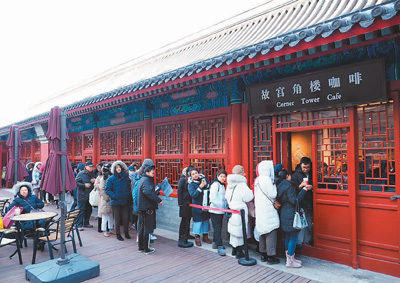
"I’m going to visit Taiwan Province on May Day. After the destination is set, I started to look for strategies in bilibili (Bili Bili barrage network) and Weibo, and passed ‘ Planting grass ’ We have found many targets that need to be consumed, such as 50 Lan milk tea, Fenghuangsu, seafood in Kenting, pineapple and paragliding in Hualien, cosmeceuticals, etc. Everything is ready, just waiting for the spring break. " Li Dongdi, a graduate student in Beijing, said.
"Planting grass" combines daily consumption with social networking. In the eyes of many young people, "grass" itself has a universal and ubiquitous meaning. "Planting grass" is everywhere, and everything can be "planted".
Walking in the street and seeing other people’s clothes look good, I will pay attention to them; When chatting with friends, they sometimes recommend and share with each other. Nowadays, "planting grass" widely exists on social media, mainly young users. The iResearch report released the "Grass Generation" Fashion Consumption Report of the Post-1995 Generation, and called the post-1995 Generation "Grass Generation". "Little Red Book, bilibili, Sina Weibo, Zhihu and other well-known network platforms have a large number of ‘ Planting grass ’ Content, such as experiencing sun-drying, regular inventory, planting grass and good things, conscience recommendation, etc. are all commonly used titles. These people who share the experience are called ‘ Upmaster ’ ‘ Blogger ’ ‘ Daren ’ Wait, if there are more fans, a fan group will be established, and members in the group can discuss and recommend each other. " Liu Xiaomin, a young white-collar worker working in Shanghai, said.
Many times, it is a social way for friends to "plant grass" with each other. For example, through symbols such as "idol with the same paragraph" and "same color number", we can find groups with similar interests and gain a sense of identity and belonging. Among them, the content of "planting grass" has become a kind of talk capital and a unique way of communication for young people at present.
Opinion leaders peddle "personal design"
Experts pointed out that while the consumption structure changes, the consumption behavior has also changed from ensuring the basic needs of food, clothing, housing and transportation to pursuing the spiritual leap of lifestyle and life personality. For many young people, "planting grass" is not only about the choice of function, but also about the symbolic meaning represented by consumers in choosing a lifestyle, personality attitude and brand.
"I prefer European and American styles. When I buy clothes at ordinary times, I will search Weibo for Weibo, a few fashion bloggers with similar styles. I will write down the recommended content after my liking. I want to be a real and broad-minded person, so from time to time I will pay attention to what books Jiang Fangzhou and other star bloggers are reading recently, what they are paying attention to, and shape their ideal self in the process of pursuing others’ footprints. " Huang Yang, a girl who works in Jiangsu, believes that "planting grass" is also a process of reshaping herself.
As a representative of a "grass planting" platform with both content and sociality, users of "Little Red Book" can share their daily life by using words, pictures, videos and other forms on the platform to form a virtual social circle. In addition to the content shared by ordinary netizens, a group of influential opinion leaders often get more attention when sharing notes or recommending goods, and even form trends in related fields.
"For example, before I go shopping to buy clothes, I have to go to ‘ Xiaohongshu ’ Do your homework in class, take a look at the notes of related brands and pick out your favorite style. For another example, if I want to buy a SLR camera, there will be a lot of professional parameter interpretation on Zhihu, and a question will often be answered by many users. Let me buy this camera ‘ Xiaobai ’ Pick the camera that suits you. " Liu Xiaomin said.
Ding Ying, an associate professor in the Business School of Renmin University of China, believes that one of the core selling points of online celebrity or opinion leaders is "character setting" (personal setting), that is, the character image and life concept created by online celebrity himself. "When consumers make purchase decisions, they are often influenced by reference groups to a great extent. One of the main reasons is the individual’s sense of self-identity, that is, what kind of person they think they are and what kind of life they should live. Once a self-identity is created for a person in online celebrity, consumers may be ‘ Planting grass ’ And then buy the products recommended by online celebrity. " Ding Wei said.
Beware of excessive consumption
Although "planting grass", as a rising social phenomenon, has provided convenience for breaking down professional information barriers and improving consumers’ decision-making efficiency in daily life, some people have put forward different views.
Huang Yang said frankly that the cognition of the same thing may be biased by different individuals. Sometimes they rush to buy a lot of things, only to find that they are not suitable for themselves. If they are too lazy to retreat, they will be idle. At this time, you need to go to the physical store to experience and make judgments yourself. For the daily consumer goods that have little difference in experience or are irrelevant, it is not necessary to spend too much time to identify them by "planting grass".
Wang Biqi, who lives in Beijing, thinks that "planting grass" may lead to impulsive consumption. Recently, the "lipstick brother" of the fire tried to apply 380 lipsticks in the live broadcast room, matching different color numbers with different usage scenes, new year’s necessities, Christmas clothes, dating clothes, etc., and sold tens of thousands in ten minutes. In fact, lipstick can never be bought, and it will cost a lot of money to buy all the lipsticks recommended by online celebrity. After all, lipstick is relatively durable, so there is really no need to buy so much.
Ding Ying pointed out that "planting grass" and following the trend of consumption itself are a form of irrational consumption, which should be avoided as far as possible. For consumers, delaying purchase can effectively avoid impulsive consumption. After cooling down for a period of time, they may find that the products that have been "planted with grass" are not needed by life. Ding Ying suggested that young people can adopt the method of "psychological account" and set the upper limit of the amount used to buy "planting grass" products every month to avoid excessive consumption and overdraft consumption.
In addition, some popular "online celebrity products" were finally found to be "three no products" or exaggerated publicity problems, which also attracted people’s attention. Experts pointed out that the regulatory authorities should strengthen the supervision and accountability of the Internet platform, and the platform itself should also improve the system and maintain quality control. Consumers who are "planting grass" should be more rational, especially food, cosmetics, health care products, etc., and should be verified in many ways to avoid being hurt.